
Genocide .live

Israeli settlers invaded Palestinian lands near the village of Tell
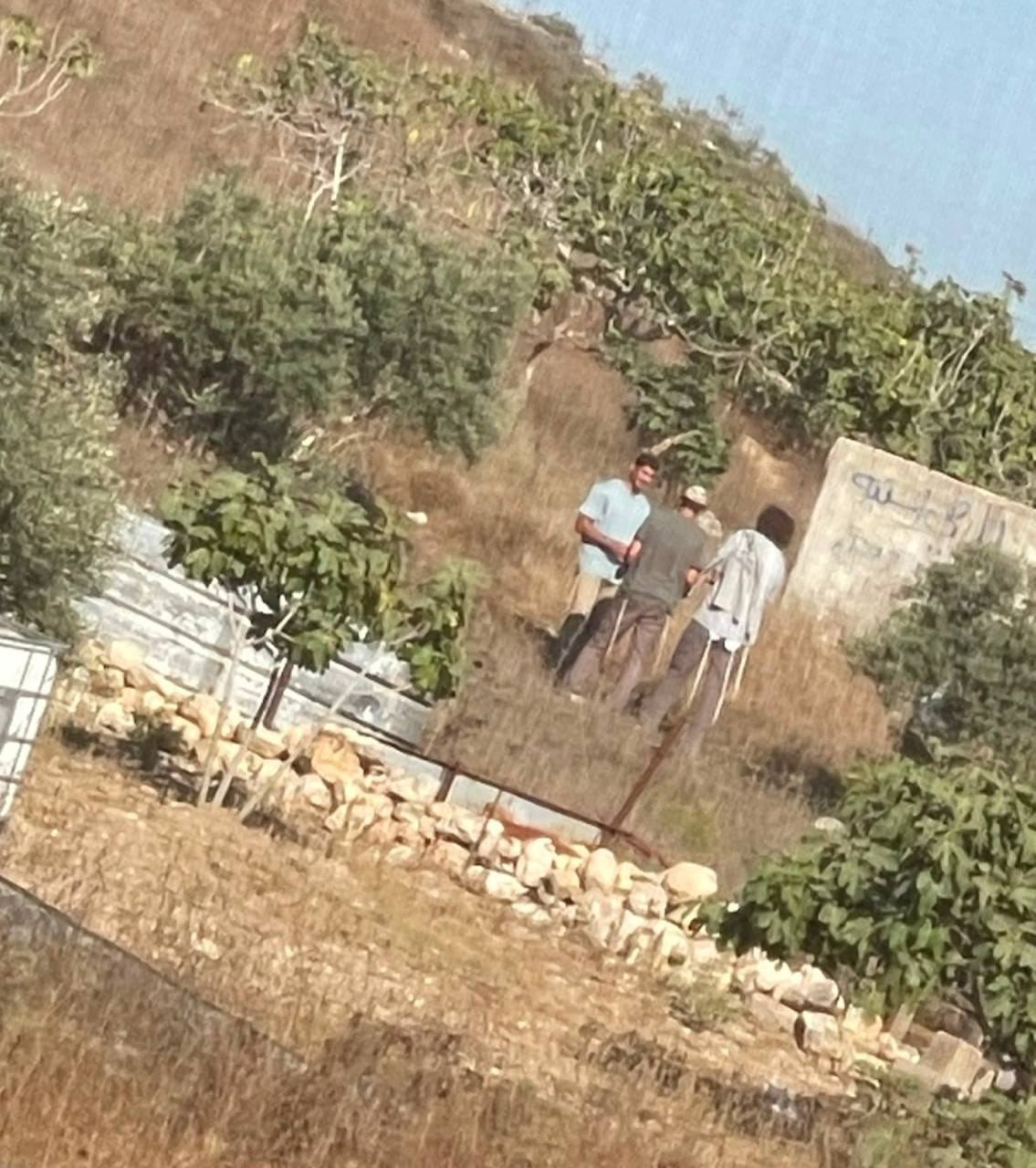
Original Social Media Post
"Israeli settlers carried out acts of aggression on Palestinian lands near the village of Tell, southwest of Nablus, in the occupied West Bank." - Source
Event Notes
Massacre in Tell during a coordinated attack of settlers and soldiersOn July 24, 2026, at 7:30, a large group of settler, including many children, went out from the Havat Gilad settlement or the Havat Gilad, near Nablus in the West Bank to an organized "hike" that turned to a pogrom in the nearby Palestinian village of Tell in the West Bank (Areas A and B, normally off-limits to Israelis). While attacking the locals, one of the victims managed to grab his attacker's weapon, and shot him to death before being martyred, to the sound of settlers (among them children) cheering and yelling "ARAB DOWN" and "REVENGE". One of the settlers then continued to execute three more Palestinians in cold blood, while soldiers were standing and watching from the side.
Four Palestinians were killed and eight wounded during the settler and security forces attack, while one Israeli settler serving in a settlement security unit was killed probably by Israeli gunfire and an IDF soldier after a Palestinian seized a rifle and fired at him in self defense: Farouq Adnan Ali Ramadan, a Palestinian sheikh snatched a rifle from one of the armed Israelis who charged at him in a threatening manner with his gun raised and aimed directly at the Palestinian. He then shot in direction of the Israeli forces. Israeli forces then shot and killed the Palestinian already on the ground. Three other Palestinians were shot dead immediately afterward in what Palestinian officials described as a field execution, and eight others were wounded in the Israeli settler and security forces attack
Shehab News reports that residents of the town of Tell confirm that the deceased settler was named "Yaakov", and he worked as a security guard for the "Havat Gilad" settlement. According to residents, he was known for his repeated assaults on Palestinian villagers in the area. But according to Israeli medias and IDF, his name is Benyahu Mellet, Major Sergeant reservist, a member of the Havat Gilad emergency response team and responsible for agriculture in the community.
Names fo the martyrs:
The four martyrs, and cousins, from Telt executed in cold blood by Israel's soldiers by urging "Havat Gil'ad" terror outpost settlers, are:
-
Ibrahim Hussein Ali Ramadan, 32 years old,
-
Jawad Hussein Ali Ramadan, 27 years old,
-
Farouk Adnan Ali Ramadan, 41 years old,
-
Imran Ahmed Ali Ramadan, 37 years old.
Other Palestinian casulaties:
According to the Red Crescent, the number of people injured in the settlers’ attack on the village of Furayta, east of Qalqilya, has risen to eight, including six wounded by live ammunition, one struck in the head by a stone, and another injured by a rubber bullet. Three were wounded critically, as Israeli troops continued firing live rounds and blocked ambulances from reaching parts of the village. Meanwhile, settler groups set fire to homes, farms, and vehicles in widespread revenge attacks across Palestinian areas following the deaths of the two Israelis.
The 4 among the wounded (including 3 seriously) as a result of gunfire by the forces and settlers in the village of Tal are: Thaer Muhammad Ramadan, Urwa Hussein Ali Ramadan, Muhammad Khader Al-Saifi, and Nasr al-Din Hassan Asida.
Israeli casulaties:
-
Benayahu (Benaya) Mellet, 32 — a member of the civilian defense team/security coordinator of Havat Gilad. He was reportedly killed after a Palestinian man seized his rifle and opened fire. However, there are reports and video-based accounts suggesting that Mellet himself may have been hit by Israeli fire during the ensuing exchange, rather than being killed by the Palestinian who took his weapon. This point appears to remain disputed.
-
Maj. Yuval Ezra, 27 —a battery commander of the 411th Battalion in the 282nd Artillery Brigade an IDF officer— who was on the scene, backing the settlers, and was also killed in the exchange.
Aftermath:
Israel was deploying forces across the northern occupied West Bank and preparing what it calls “extensive counterterrorism operational activity” after the deadly confrontation near Tell, while settlers have begun carrying out revenge attacks on Palestinian villages. Minister Ben Gvir said Palestinian villages in the West Bank should be razed to look like Beit Hanoun in Gaza, a town Israel completely leveled, for revenge for the Palestinian resisting. The Israeli military said it postponed soldiers’ leave for the weekend, deployed additional forces, imposed roadblocks around Nablus and Tell. Israeli settlers have since launched revenge attacks on nearby Palestinian communities, wounding at least two people already, according to Israeli media, raising fears of a wider wave of violence under the cover of the military crackdown.
Joint Statement from Prime Minister Benjamin Netanyahu and Defense Minister Israel Katz:
Prime Minister Benjamin Netanyahu and Defense Minister Israel Katz have instructed the IDF today, following consultations with members of the Security Cabinet and the heads of the security establishment, on a series of steps in response to the terrorist attacks over the past 24 hours:
-
Demolition of the home of the terrorist behind this morning's attack near the village of Tell.
-
Forceful action in villages acting as terrorist hubs, including arms confiscation, revocation of work permits, and additional measures.
-
Reinforcement of units throughout Judea and Samaria.
-
Separation of traffic routes and checkpoints.
-
Accelerating the legalization of farm outposts and establishment of new ones.
Prime Minister Netanyahu and Defense Minister Katz offer their condolences to the Mellet family, whose son Benayahu was murdered this morning in the heinous attack, wish a full recovery to the injured, and stand by the security forces and the residents in their steadfast stand against terrorism.
The Prime Minister and the Minister of Defense emphasize that the security forces must be allowed to operate freely and with full force against terrorism, and call to refrain from any action that could harm their operations or divert them from their primary mission of protecting the citizens of Israel and defeating terrorism.
Visual investigation by Drop Site:
- The Palestinian man, Farouk Ramadan, initially appears to be trying to protect another Palestinian (likely his brother) when an armed settler hits him in the head with a rifle.
- As he moves away, he is kicked or struck from behind. Still, he retreats again.
- Israeli settlers or the surrounding soldiers (under whose protection the incursion appears to be taking place), then fire live shots. The sounds of gunshots can be heard clearly in the video.
- An armed Israeli settler then charges directly at Farouq Ramadan and a fellow Palestinian with a gun raised and pointed at their chest, closing distance between them, as gunshots are heard in the background.
- Farouq Ramadan disarms him, takes the rifle, and aims at the settler, and purportedly shoots him dead.
On the sequence visible in the footage, it is clear he is acting in self-defense against an imminent armed threat than the “terrorist attack” senior Israeli officials are calling it and using to justify pogroms in Palestinian villages.
Five Palestinians were ultimately killed in the broader settler and Israeli military forces attack in this incident. Dozens more have been wounded and property damaged since.
Aftermath:
At 09:20, the occupation forces stormed the city of Nablus, raided and searched Nablus Specialized Hospital, detained those inside, and arrested 2 citizens from inside: Al-Askari - Majd Hussein Ali Ramadan, and his brother Urwa (wounded) - residents of the village of Tell.
The Israeli forces involved was Duvdevan, under the Samaria Brigade and Shin Bet guidance, arrested two Palestinians allegedly involved in the shooting near the village of Tell, and transferred them for questioning. Israeli authorities said they had identified all those allegedly involved and were continuing efforts to arrest them.
The Israeli army imposed a closure on Nablus and a full curfew on Tell and Burin, announcing preparations for an extensive military operation.
These are the Palestinian villages attacked the same day by Israeli settlers in "retaliation":
Madama, Urif, Surra, Al-Naqoura, Sinjil, Asira al-Qibliya, Tall, Burin, Qabalan, Birzeit, Jiljilya, Fara'ata, Idna, Beit Furik, Imatin, and Umriha.
At 03:35, on July 25, the Israeli forces stormed the village of Tell, raided and searched many homes, and arrested 30 citizens (including 2 soldiers from the National Security Forces and a customs officer). The 30 detainees in the village of Tal are: Nimr Khaled Hindi, Ahmed Yamin, Nizar Hindi, Muhammad Ali Ramadan, Nizar Munther Ramadan, Ezz El-Din Ismail Ramadan, Hossam Hindi, Moayed Hamad, Jaafar Rayhan, Muhammad Asida, Mahmoud Asida, Bilal Shtayyeh, and Moaz. Shtayyeh, Malik Shtayyeh, Yahya Al-Wadi, Mahmoud Al-Ayoub, Muhammad Al-Ayoub, Mahmoud Asaad Ramadan, Muthanna Shtayyeh, Abdel Moneim Ramadan, Mahmoud Al-Sheikh, Al-Askari: Mashhour Helmy Ramadan, Radwan Ali Ramadan, and Al-Askari - Suhaib Radwan Ramadan Asim Asida, Issam Al-Saifi, Taher Al-Saifi, Nasrallah Asida, Sufyan Shtayyeh, and Muhammad Jamal Ramadan.
According to Quds News, senior Israeli officials and settler leaders demanded mass destruction and ethnic cleansing of Palestinian communities across the occupied West Bank, framing the attack on Tell as part of a broader campaign to impose new realities on the ground.
During the next week, the Israeli army raided every day the village of Tell, arresting surviving members of the Ramadan family or other residents.
IDF Chief of Staff Lt. Gen. Eyal Zamir viewed the off-duty soldiers’ participation in the hike with severity, but the IDF did not plan to punish them. Since the deadly incident, settlers have established 13 illegal outposts in the area, some close to Tell. The senior officer said that the military was currently being prevented by Israel’s political leadership from dismantling the outposts, which have placed a significant strain on the army. The official said that the IDF hopes that in the coming days the policy will change and permit the military to dismantle the illegal outposts.
Investigation by IDF:
Times of Israel published this article on Augustus 6, reflecting an investigation by the Israel Defense Forces into the previous month’s deadly clash in Tell
The Investigation "has found that the hike by Israeli settlers in the area was not coordinated with or authorized by the army, and that officers did not respond to an ensuing clash with Palestinians with sufficient manpower.
The investigation also could not rule out the possibility that one of the fatalities, a civil defense squad member for a nearby settlement who rushed to the scene, was shot by Israeli soldiers amid the incident.
According to the probe, the military’s Samaria Regional Brigade learned of the July 24 hike the night before it took place but was unable to obtain details on the route or contact the organizers.
A military official said the hike would not have been approved anyway due to its route through areas A and B of the West Bank, including in a Palestinian village. The Israel Police was investigating the organizers of the unauthorized hike.
The hike began at 5:30 a.m., with dozens of settlers, including minors and two off-duty soldiers, setting off from Har Bracha, located in Area C of the West Bank, which is under full Israeli control. Har Bracha (הר ברכה, meaning “Mount of Blessing”) is an Israeli settlement in the occupied West Bank, founded in 1982, located on the southern slope of Mount Gerizim, immediately southwest of Nablus (Shechem) and administrated by the Shomron Regional Council.
The Group briefly entered Area A — under Palestinian Authority control and off limits to Israelis — then returned to Area B as they headed toward the settlement of Havat Gilad.
IDF surveillance soldiers first spotted the Israelis walking inside Area B on the outskirts of Tell at 7:27 a.m. They dispatched a small number of troops of the 282nd Artillery Regiment’s 411th Battalion — who were stationed at an army outpost in the area — to the scene to, according to the IDF, "escort the settlers out."
A short while later clash occured with Palestinian residents and artillery battery commander Maj. Yuval Ezra, 27, began heading to the scene, while also dispatching the security coordinator for Havat Gilad and his deputy, civil defense squad member Benayahu Mellet, 32.
The three arrived at the scene at around the same time, as the clashes on the edge of Tell between the Israelis and Palestinians spun out of control.
Maj. Yuval Ezra, 27, and Cpt. (res.) Benayahu Mellet, 32, who were killed in a West Bank gunfight on July 24, 2026. (Courtesy) At around 8:16 a.m., the security coordinator and Mellet engaged in a physical confrontation with the Palestinians, during which the security coordinator was seen in footage taking his gun off his shoulder to push the Palestinians back.
The security coordinator’s gun was snatched out of his hands by Tell resident Farouk Ramadan, who opened fire on the Israelis.
Amid the chaos, which lasted around 90 seconds, Ezra, Mellet, the security coordinator, the platoon commander and the two off-duty soldiers — one of whom is a reservist — opened fire back at the Palestinians. The coordinator fired with his handgun after his rifle was stolen.
According to the probe, Ezra was shot in the head by Ramadan and killed, while Ramadan was fatally wounded by a shot from Ezra. Footage showed Ramadan stumbling for a short while before collapsing and dying.
Mellet, who was also killed, may have also been shot by Ramadan, although the military believes he was possibly hit by one of the soldiers. Neither scenario can be probed because his body was buried without an autopsy. “The issue was examined during the investigation, but no definitive conclusion was reached,” the military said.
The IDF said the platoon commander and two off-duty soldiers killed another three Palestinians. Two other Palestinians, brothers, who were seriously wounded during the clash, were captured by Israeli commandos at a hospital in Nablus hours after the incident.
The investigation also noted that the soldiers were authorized to use fire, but said the force that responded to the scene “was too small relative to the scale of the violent incident, the number of hikers, and the number of attackers.”
Forces in the area “did not act optimally to develop a complete situational picture, dispatch additional forces, and deploy medical teams as required,” the probe found.
The IDF said that the investigation also revealed a “serious failure” by the troops who left Mellet’s body at the scene “for many minutes.” Mellet was treated by a civilian medic without the presence of soldiers, and only later did backup troops arrive and evacuate his body.
The investigation also noted that the soldiers were authorized to use fire, but said the force that responded to the scene “was too small relative to the scale of the violent incident, the number of hikers, and the number of attackers.”
Forces in the area “did not act optimally to develop a complete situational picture, dispatch additional forces, and deploy medical teams as required,” the probe found.
The IDF said that the investigation also revealed a “serious failure” by the troops who left Mellet’s body at the scene “for many minutes.” Mellet was treated by a civilian medic without the presence of soldiers, and only later did backup troops arrive and evacuate his body.
Mellet, who was in the process of becoming an officer in the reserves and had served for hundreds of days during fighting in the Gaza Strip under the Jerusalem Brigade, was posthumously promoted to the rank of captain, the military said.