
Genocide .live

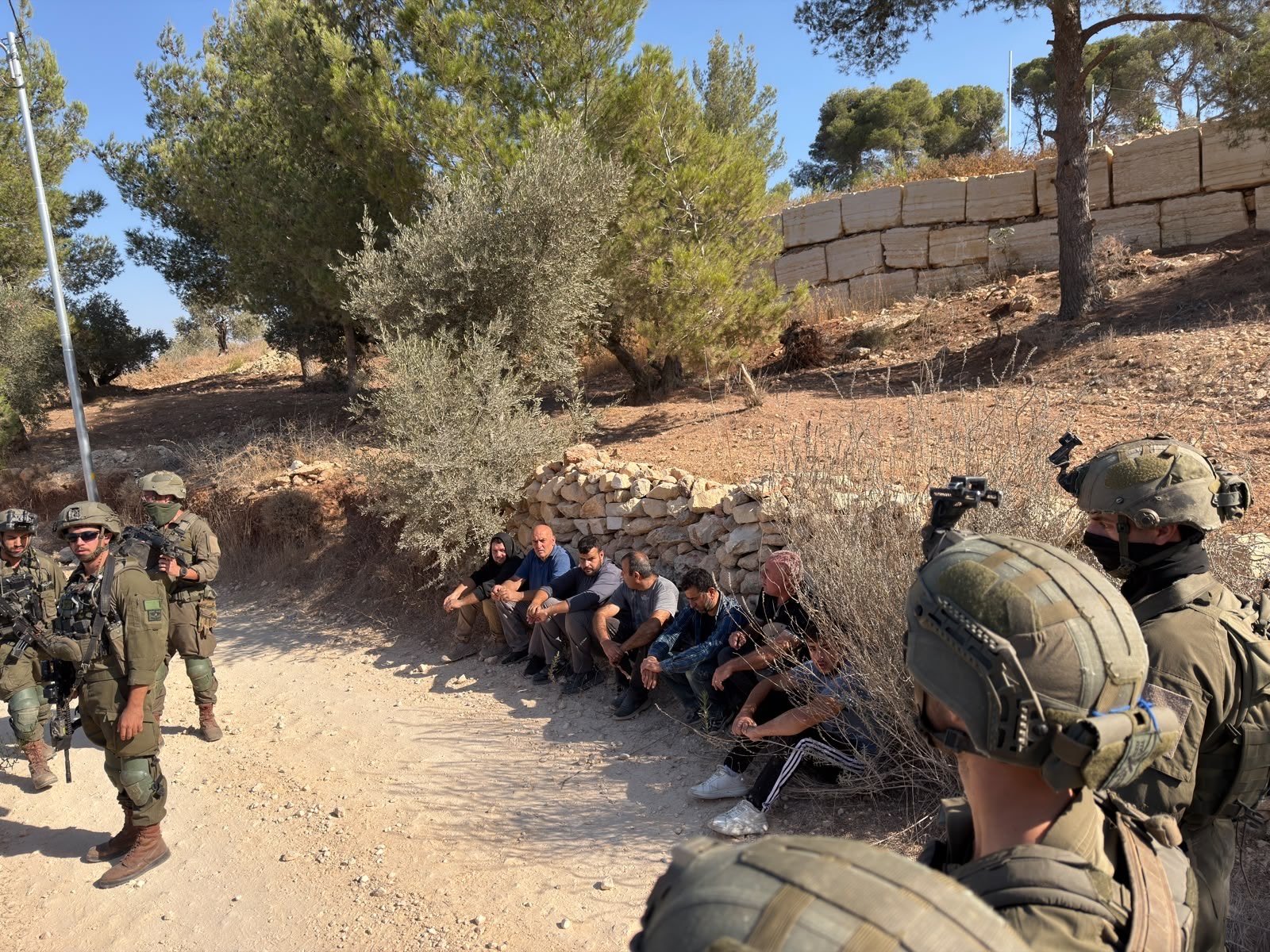
Israeli soldiers detain Palestinian farmers in Jabal Qamaas, near the town of Beita, during the olive harvest
Original Social Media Post
"Israeli soldiers detain Palestinian farmers in Jabal Qamaas, near the town of Beita, south of Nablus." - Source
Event Notes
Attack on the olive harvest (2026)For 2026, the olive harvest in the occupied West Bank is taking place in a particularly restrictive and violent context. Even if the harvest has not yet fully begun as of 30 September 2026, some incidents and obsruction from the settlers and/or the soldiers were already reported. The Palestinian Ministry of Agriculture set 15 October as the start date for harvesting the main Nabali Baladi variety, with some other varieties beginning on 5 November. Pickling olives could be harvested from 20 September. The ministry estimates approximately 21,000 tonnes of olive oil for the 2026 season.
The 2026 season follows extensive destruction of olive trees. In September, Israeli military bulldozers uprooted large olive groves near Deir Nizam, north-west of Ramallah, shortly before the harvest. Reuters reported that approximately 9 acres of olive trees belonging to several Palestinian farmers were destroyed. The Palestinian Ministry of Agriculture documented, for example, the uprooting of around 500 olive trees over 26 dunams near Jalbun and Faqqu'a in March. Thousands of trees were uprooted or cut by settlers or soldiers during the past year.
Access to olive groves is already being restricted. On 29 September, for example, Palestinian farmers from Deir Istiya, west of Salfit, were prevented from reaching their olive groves by settlers. The report says the settlers were accompanied/protected by Israeli occupation forces.
Settler attacks are a major concern for the harvest. The Palestinian Ministry of Agriculture launched its 2026 campaign specifically around protecting farmers and their land, with particular attention to “hotspots,” areas near settlements and land behind the Separation Wall. This is happening against a background of increasing settler attacks in 2026. A lot of incidents of settlers stealing the olive at the end of September in the Palestinian agricultural land were observed.
Access restrictions are structural: OCHA reports that Palestinian farmers whose land is near settlements or between the Barrier and the Green Line may require permits or prior coordination with the Israeli military. In April 2026, OCHA reported that 98 Palestinian communities in nine governorates were required to use prior-coordination arrangements to access farmland near settlements
Timeline of the main events:
28 Sept — Beita, Nablus: settlers entered Palestinian land and stole an unspecified quantity of harvested olives. Similar thefts were reported in Khirbet Masoud, Sinjil, Turmus Ayya and Umm Safa. In Deir Abu Mash'al, a Palestinian vehicle was set on fire.
29 Sept — Deir Istiya, Salfit: settlers, protected by Israeli forces, prevented farmers from reaching their olive groves and harvesting.
1 Oct — Odla, Nablus: settlers attacked olive harvesters and prevented them from harvesting
On 1st October, masked settlers from nearby outposts attacked Palestinian farmers and Israeli activists supporting them during the olive harvest in Jannatah, near Bethlehem, using clubs, stones and pepper spray. Four activists were injured and three were hospitalized, including two with head injuries. IDF soldiers arrived after the attack.
On October 1, in Yasuf, Salfit, settlers attacked Palestinian homes and opened fire. Mashhour Shaher Yassin, 51, was killed; two others were injured by live ammunition. Several people were detained.
On October 1, in al-Mughayyir, settlers were filmed vandalizing olive trees and stealing olives, while soldiers were present.
On 2 October, Baha al-Natshah, 19, from Kafr Aqab, was shot dead near Kobar, west of Ramallah, during clashes involving settlers and Israeli forces. Reports differ on whether the fatal shot was fired by settlers or the IDF; his body was reportedly taken by the Israeli army.
On October 2, settlers, protected by Israeli occupation forces, attacked residents and farmers in the Jabal Qamas area of Beita. The settlers attacked farmers and activists in Jabal al-Arma, east of Beita, during which live ammunition was fired and residents were prevented from reaching their lands or picking their olive. Soldiers arriving to support the settlers, and fired tera gas and stun grenades on the residents, the activists and the journalists on the scene. At least one Palestinian was injured.
On October 2, in the Nablus governorate: attacks on harvesters were reported in Urif, Jamma'in, Awarta, Asira al-Qibliya, Beit Furik and Deir Sharaf. Three Palestinians were injured; in Deir Sharaf, a farmer and his wife were beaten and wounded. Israeli forces also used stun grenades and tear gas.
On October 2, in Az-Zawiya, Salfit, a Palestinian olive picker was pepper-sprayed in the face and injured.
On October 3, settlers, protected by Israeli occupation forces, attacked residents and farmers again, in the Jabal Qamas area of Beita, south of Nablus, while they were harvesting olives, for the second day in the row. Local sources reported that the settlers attacked the olive pickers, while the dsoldiers intervened and detained a number of young men and solidarity activists who had come to the area to support the farmers. The Israeli forces also detained and assaulted several journalists while they were covering the events in the area, while military reinforcements were deployed to the town of Beita.
On October 3, in Osarin, Nablus: a 50-year-old farmer was beaten and hospitalized. Settlers also stoned homes and vehicles, causing property damage. In Jaba, Jenin and in Abud Dis Jerusalem, settlers set olive trees on fire.
On October 3, in Burin, Nablus: settlers attacked olive harvesters, stole agricultural equipment and harvested olives; three Palestinians suffered tear-gas inhalation during the army's intervention.
Names of the martyrs:
1 Oct — Yasuf: Mashhour Yassin, 51, injured during a settler attack, died later in the hospiTal. 2 Oct — Kobar: Baha al-Natshah, 19, shot dead; responsibility for the shooting (settlers or soldiers) is disputed between reports.