
Genocide .live

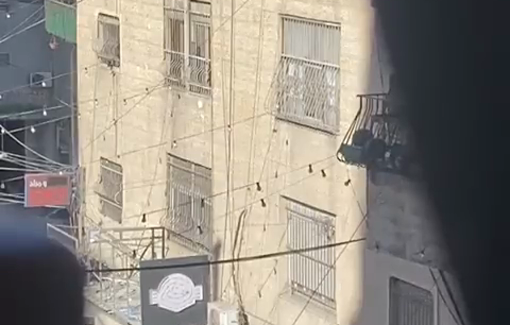
Unfair arrest and condemnation of child Mohammed Zalbani
West Bank, East Jerusalem
01 Feb, 2023 - 17 Feb, 2025
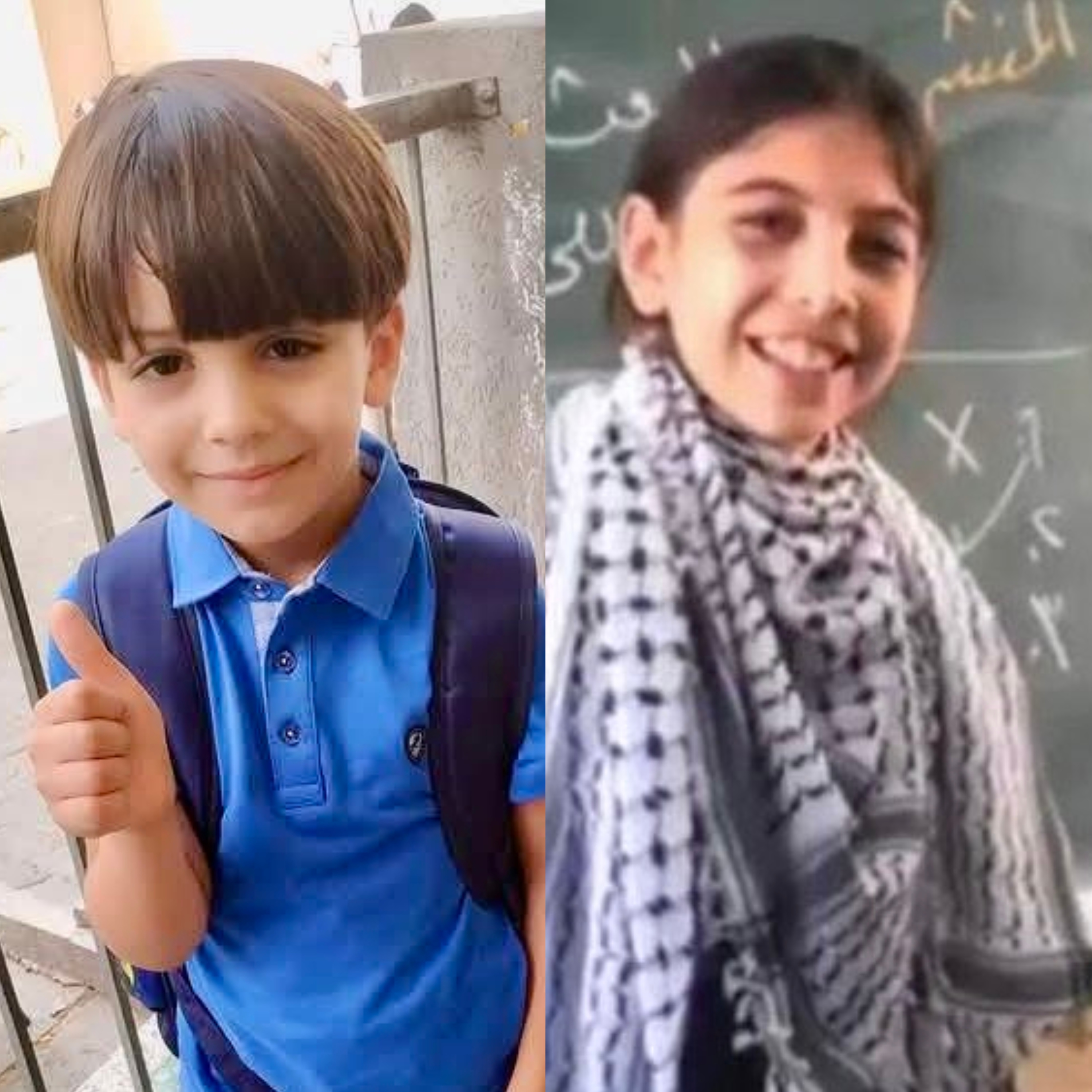
On February 17, Israel has sentenced 15-year-old child Mohammad Basil al-Zalbani, from Shuafat refugee camp in occupied East Jerusalem, to 18 years in prison and fined him 250,000 shekels (or to pay 300,000 shekels ($83,333) in compensation according to Palestinian Prisoner Society)
Arrested at 13, he has been detained since Feb 2023. Israel accuses him of involvement in a soldier's death. His family's home was also demolished in November 2023.
Palestinian Prisoner Society said Zalbani was arrested on Feb. 13, 2023, on charges of resisting the Israeli occupation. The boy, who has been detained for 2 years, was charged with the killing of an Israeli soldier. Zalbani was accused of involvement in the killing of an Israeli soldier at a checkpoint in the Shu’fat camp in 2023. However, the soldier was killed by his colleague's gunfire, and not by Zalbani.
The Jerusalem District Court also ordered Mohammed Basel Zalbani, from the Shu’fat refugee camp, east of occupied East Jerusalem, to pay 300,000 shekels ($83,333) in compensation, the Palestinian Prisoner Society said in a statement.
"The court convicted Muhammad Zalbani, who was 13 years old at the time, of aggravated murder for stabbing Staff Sgt. Asil Sawaed, 22 at a checkpoint near the Shuafat refugee camp."
In Augustus 2023, Amnesty International has condemned Israel’s “punitive” demolition of Palestinian child detainee’s home, stressing he is being punished for a fault he did not commit. In a report the rights group said that the Israeli Supreme Court had approved “the punitive demolition of the family home of a 13-year-old Palestinian boy who has spent the past six months in pre-trial detention on unfair charges.”
“In February 2023, Mohammed Zalabani stabbed an Israeli border police officer on a bus at a checkpoint in the Shu’afat refugee camp in occupied East Jerusalem. He was overpowered, but moments later a private Israeli security guard accidentally shot the officer dead.”
According to Amnesty, the autopsy confirmed that the Israeli officer was not killed by the Palestinian child, who was charged with his murder, and is now awaiting trial in a juvenile facility.
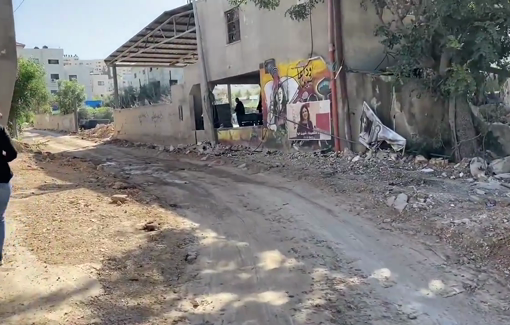
Journalist Shireen Abu Akleh Assassination
West Bank, Jenin
11 May, 2022
At least 1 martyred
## A. The murder
**On 11 May 2022**, Al Jazeera American-Palestinian reporter Shireen Abu Akleh and a group of five other journalists arrived at Balat Al Shuhada’ street in Jenin to report on a raid on the nearby refugee camp by the Israel Defence Forces (IDF). The journalists wore prominent ‘PRESS’ vests that identified them as such, from both the front and back, and followed standard protocols for self-identification as they slowly approached a convoy of five armoured Israeli military vehicles parked along an unnamed street intersecting Balat Al Shuhada’. The Israeli army vehicles were approximately 200 metres south of the journalists.
**The journalists present during this incident were:**
1° **Shireen Abu Akleh** (fatally hit in her head)
2° **Shatha Hanaysha** (first eye witness under the fire standing near Shireen when Shireen was shot and killed)
3° **Ali Al-Samoudi** (injured in the shoulder)
4° **Mujahid al-Saadi**
5° **Muhannad Nairoukh**
6° **Majdi Bannoura**
**At 6:31 AM**, an **Israeli army special forces marksman** (different from ‘snipers’, they are part of a standard fighting squad: their task is to target shots more accurately than regular troops using guns having a bio-pod and an optical scope such as Trijicon ACOG x4) fired the first burst of six bullets directly at the group of journalists from a sniper hole in the military vehicle at the front of the Israeli army convoy.
One of the shots **hit journalist Ali Al-Samoudi in the shoulder**.
**Eight seconds later**, as the journalists attempted to take cover, the Israeli army marksman fired a second burst consisting of a further seven distinct gunshots, once again targeting the journalists. One of those bullets **hit Shireen Abu Akleh in the head**, fatally wounding her.
**Two minutes later**, an unarmed civilian, Sharif al-Azab, attempted to deliver first aid to Shireen, and he, too, **was fired at with three distinct gunshots**.
See the **[Timeline of the incident reconstructed by Forensic Architecture](https://forensic-architecture.org/investigation/the-extrajudicial-killing-of-shireen-abu-akleh-extended-report/#anchor-6)**
She was transported to [Ibn Sina Hospital in Jenin](https://www.middleeasteye.net/news/israel-palestine-al-jazeera-journalist-shireen-abu-akleh-shot-dead-jenin), where she was pronounced dead, at the age of 51. The injured journalist, Ali Samoadi, of the Al-Quds newspaper, was shot in the back but survived.
## B. The aftermath of the murder
### On May 11, 2022 :
The Israeli military and [Israel's US embassy tweeted a video of Palestinian gunmen in Jenin firing down an alley](https://x.com/naftalibennett/status/1524300920959508484), suggesting they were responsible. However Israeli NGO B'Tselem visited the scene where that footage was taken, and said it was impossible for Abu Akleh to have been hit from there.
### On May 13, 2022 :
Abu Akleh’s body was brought from Jenin, where she was killed by Israeli forces on Wednesday, to Jerusalem via Nablus and Ramallah, in a procession where Palestinians paid their respects.
Palestinian Authority President Mahmoud Abbas has said that he would take Abu Akleh’s case to the International Criminal Court in an effort to get justice for the veteran reporter, who joined Al Jazeera in 1997, and was an icon in Palestine and the wider Arab world.
In a scene that violates all norms and International laws, the Israeli occupation forces stormed the French Hospital in Jerusalem and attacked the mourners of the late Shireen Abu Akleh at the start of the funeral procession. They severely beat the pallbearers of the late journalist.
Israeli forces beat crowd of mourners carrying coffin of Shireen Abu Akleh ahead of funeral in the Old City of occupied East Jerusalem.
Thousands of Palestinians have gathered for the funeral service, before Abu Akleh is taken to the Mount Zion Protestant Cemetery, where she will be buried alongside her late parents.
Sources [1](https://www.aljazeera.com/news/2022/5/13/mourners-bid-farewell-to-journalist-shireen-abu-akleh-live-news)
[](https://www.aljazeera.com/wp-content/uploads/2022/05/INTERACTIVE-Journalists-killed-by-Israeli-forces-1.png?w=770&resize=770%2C770&quality=80)
## C. Independant Forensic Architecture Investigation
### General conclusion of the investigation :
1) The journalists were clearly identifiable as press/non-combatants to the Israeli army marksman.
2) The Israeli army marksman deliberately and repeatedly targeted Shireen and her fellow journalists with the intention to kill.
3) The attack on Shireen and her journalist colleagues occurred during a period without risk to the Israeli army marksman’s life or that of other soldiers. There were no shots other than those of the Israeli marksman fired at the time and no armed individuals in the vicinity of the journalists.
4) Shireen was deliberately denied first aid after being shot by the Israeli army.
News agencies, rights groups and the United Nations have all conducted investigations into her killing and concluded that Abu Akleh was killed – likely deliberately – by Israeli troops.
### Conclusions of [Audio and acoustic analysis](https://content.forensic-architecture.org/wp-content/uploads/2022/11/2022.11.02_Final-Audio-and-Acoustic-Analysis-SAA-Report.pdf) | Gunfire
*before,during and after the killing of Shireen Abu Akleh by Researcher in charge: Dr. Lawrence Abu Hamdan:*
The shooter fired a semi-automatic weapon from approximately 180 metres away from Shireen Abu Akleh. This shooter pulled the trigger on seven separate occasions within two seconds making the claim that at no point was there any intentional gunfire carried out by IDF soldiers in a manner intended to harm the journalist” highly improbable. All gunshots audible in the 2 minutes prior to the killing of Shireen Abu Akleh are fired from the same position. No other shots in this recording are firing towards the military position from the the vicinity of Shireen Abu Akleh and her colleagues. This report finds no evidence to support the claims that life-threatening, widespread and indiscriminate shots were fired toward IDF soldiers.” The journalist was not “present in the area during an exchange of fire.
.
[The online report with videos](https://forensic-architecture.org/investigation/shireen-abu-akleh-the-targeted-killing-of-a-journalist)
[the PFD Complete report](https://forensic-architecture.org/investigation/the-extrajudicial-killing-of-shireen-abu-akleh-extended-report/)
[](https://pbs.twimg.com/media/FdImqLUXEAYqzil?format=jpg&name=4096x4096)
## D. International statements
**On October 13, 2022 UN human rights experts** [have condemned the killing](https://www.aljazeera.com/news/2022/5/13/un-experts-condemn-shireen-abu-aklehs-killing-demand-probe) of Al Jazeera journalist, Shireen Abu Akleh, and called for a prompt, transparent, thorough and independent investigation into her death. *“The killing of Abu Akleh is another serious attack on media freedom and freedom of expression, amid the escalation of violence in the occupied West Bank.(...) We demand a prompt, independent, impartial, effective, thorough and transparent investigation into the killing of Shireen Abu Akleh, in full compliance with the Revised United Nations Manual on the Effective Prevention and Investigation of Extra-Legal, Arbitrary and Summary Executions (The Minnesota Protocol on the Investigation of Potentially Unlawful Death).
We urge the Israeli and Palestinian authorities and other stakeholders to cooperate with such an investigation."*
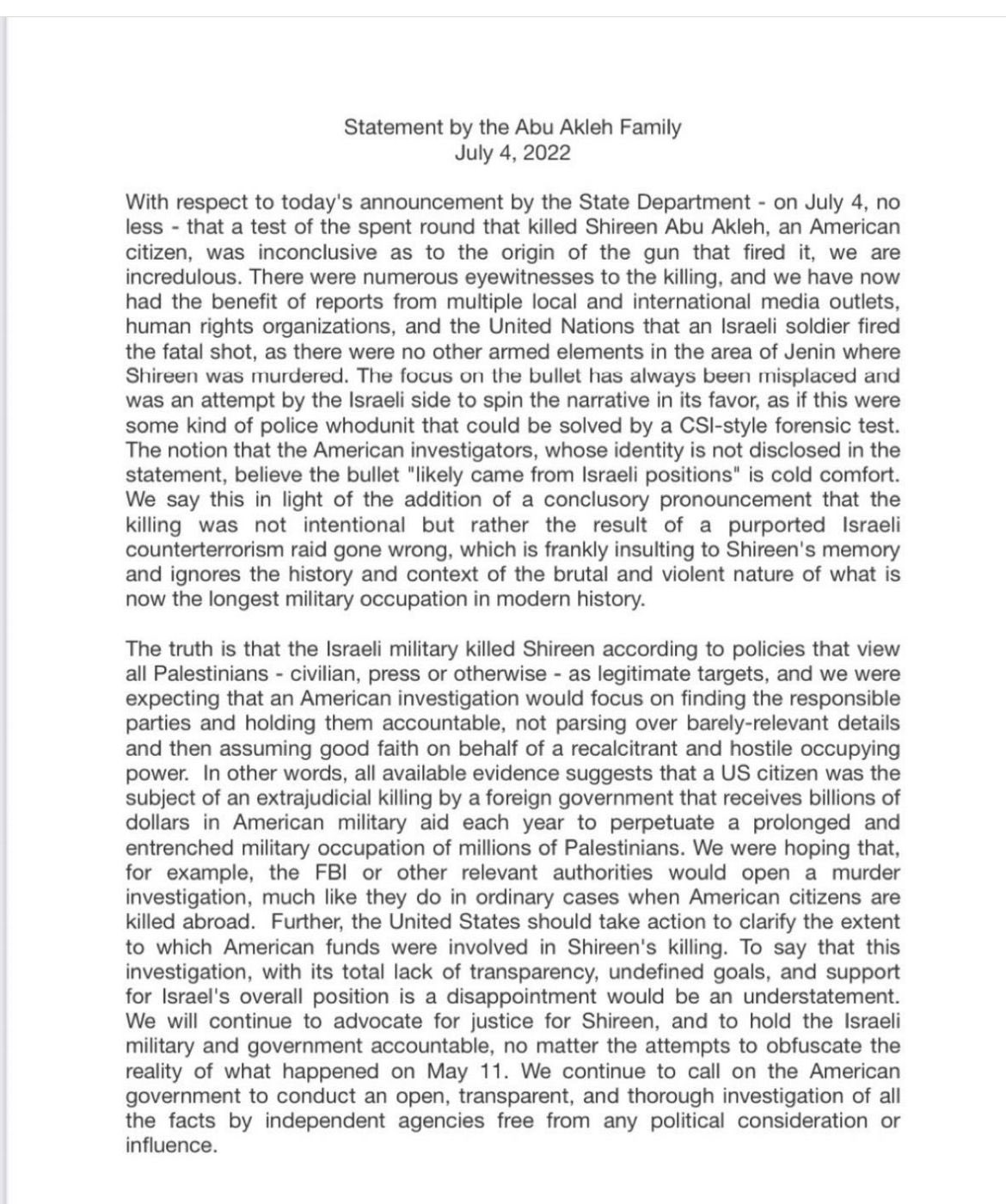
**Powerful statement by Shireen Abu Akleh’s family** saying they are “incredulous” after the State Department released its finding, calling it “insulting to Shireen’s memory.”
## E. Further linked incidents againt press freedom and Shireen Memory
Her funeral was [assaulted by Israely Security Police](https://www.aljazeera.com/news/2022/5/13/mourners-bid-farewell-to-journalist-shireen-abu-akleh-live-news)throughout the procession in Jerusalem, with the coffin bearers being violently beaten with batons and prevented from moving forward. The coffin nearly fell to the ground multiple times. All of these scenes were filmed and broadcast around the world. The White House denounced the violence as “deeply disturbing.”
Her memorial, located at the site where she was killed, was desecrated by Israeli forces during a raid in Jenin in October 2023. A D9 Caterpillar bulldozer was used to clear the road and destroy the street mural commemorating her.

*Picture: Samar Hazboun for The New York Times*
During the Israeli raid on the Al Jazeera office to shut it down in September 2024, the poster in memory of Shireen that adorned the façade was immediately removed and torn apart in full view of the cameras.
Her colleagues, and particulary Shatha Hanaysha, were subjected to threats and attempts on their lives while covering stories.
On September 19, 2024, Israeli forces [violently arrested](https://x.com/DropSiteNews/status/1839358600449290417) prominent Palestinian journalist Mujahed al-Saadi, breaking into his home in the middle of the night in Jenin, an illegally occupied part of the West Bank. Al-Saadi had been present when the IDF shot and killed Shireen Abu Akleh in 2022 and had recently reported for Drop Site during Israel’s brutal 10-day siege of Jenin.
### The U.S. protection of the Israel impunity: “U.S. Assessment of Israeli Shooting of Journalist Divided”:
On June 20, 2022, The NYT published an investigation showed that there were no armed Palestinians near her when she was shot. It contradicted Israeli claims that, if a soldier had mistakenly killed her, it was because he had been shooting at a Palestinian gunman. This investigation also showed that 16 shots were fired from the location of the Israeli convoy, as opposed to Israeli claims that the soldier had fired five bullets in the journalists’ direction.
However, on July 2022, a State Department statement claims that the damage to the bullet made it difficult to draw a definitive conclusion about the gun it was fired from. But shots fired from the position of the Israel Defense Forces were “likely responsible for the death,” U.S. officials “found no reason to believe that this was intentional but rather the result of tragic circumstances during an I.D.F.-led military operation,”.
The Israeli government had cast doubt on that, saying that she was hit by either an Israeli soldier or a Palestinian gunman. Israeli officers have said that an Israeli soldier from Duvdevan, an elite unit, fired in Ms. Abu Akleh’s direction, but that it was impossible to determine who shot her without examining the bullet.
The New York Times revealed on Monday morning, October 27, 2025, new details regarding the killing of journalist Shireen Abu Akleh, who was shot dead by Israeli forces in 2022. According to the report, a U.S. Army colonel stated that the official U.S. assessment of the killing of Palestinian-American journalist Shireen Abu Akleh in 2022 was “deliberately softened” to avoid a diplomatic dispute with Israel, as reported by the Israeli newspaper Israel Hayom. The report added that some U.S. officials involved in reviewing the circumstances of the incident reached the conclusion that the shooting of Abu Akleh was intentional.
The U.S. government conducted a review into the shooting of a journalist by Israeli forces. The assessment concluded that gunfire from Israeli military positions was “likely responsible” for the journalist’s death.
However, American officials also stated they “found no reason to believe” the shooting was deliberate or constituted a policy of targeting journalists. The division among U.S. analysts and the qualifier “likely responsible” highlight the difficulty in attributing full accountability or intent in the circumstances.
Abu Mazid family house bombed
Gaza, Deir al-Balah, Zawayda
26 Apr, 0025 - 26 Apr, 2025
At least 4 martyred
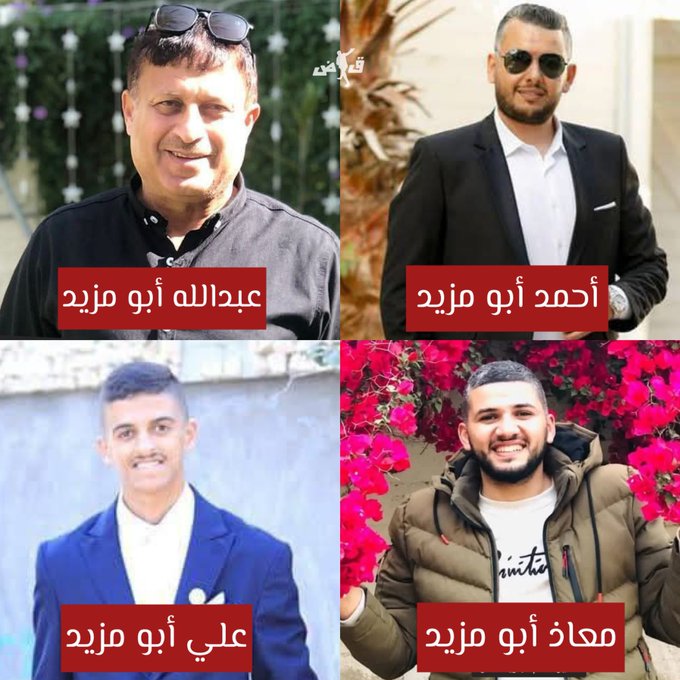
At midday, an Israeli drone airstrike targeted the Abu Mazid family house in the town of Zawayd, central Gaza, killing four men from the family.
**Names of the martyrs:**
1. Abdullah Hussein Abu Mazid
2. Muad Fouad Abu Mazid
3. Ahmad Fouad Abu Mazid
4. Ali Fawzi Abu Mazid
Al-Suwairki family - Shujaiya
Gaza, Gaza City, Shujaiya
01 Jan, 0025 - 01 Jan, 2025
At least 6 martyred
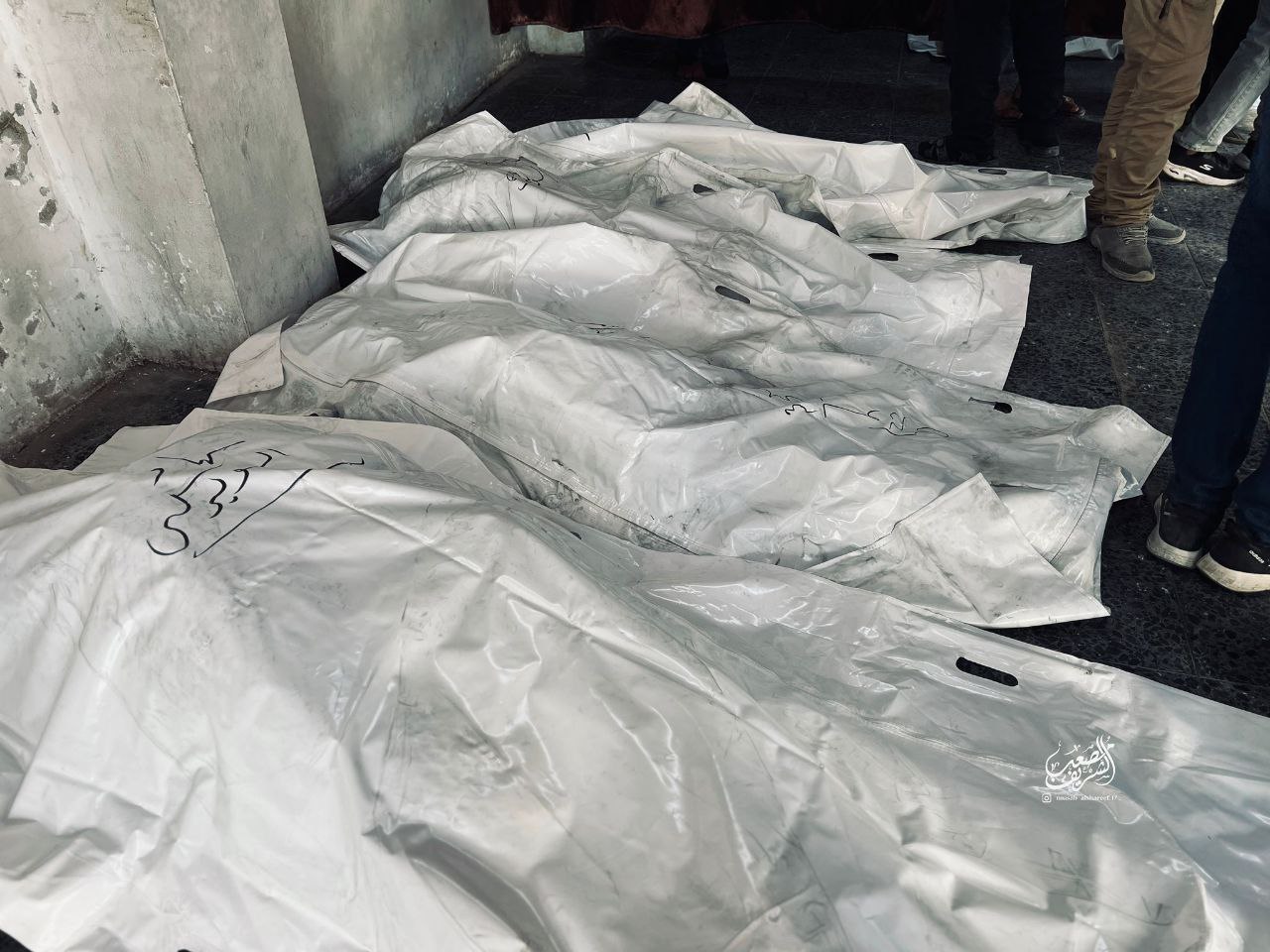
Around 1:30 pm, an Israeli airstrike targeted the Suwairki family home on Moshtaha Street in Shujaiya neighborhood, east of Gaza City.
Six people were killed, including three children and two women.
**Names of the martyrs (identified):**
1. Mirfat Al-Suwairki
2. Farah Al-Suwairki (Mirfat's daughter)
3. Mutayam-billah Muhammad Al-Suwairki -child)
4. Hala Muhammad Al-Suwairki (child)
5. Sohad Al-Suwairki
(Sources: [1](https://x.com/F24online/status/1874419788791107981) [2](https://x.com/refugeesps/status/1874445816703901870) [3](https://x.com/Qadeyah1/status/1874547060613304634))
**Photos**
Pogroms and ethnic cleansing in Khirbet al-Fakheit
West Bank, Masafer Yatta, Al-Khalil/Hebron, Khirbet al-Fakheit
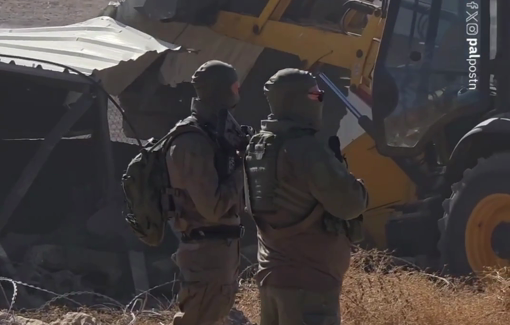
In Khirbet al-Fakheit, Masafer Yatta, in the West Bank, there are two overlapping processes: the long-term state-led coercive displacement — demolitions, the firing-zone regime, restrictions on construction and infrastructure; and the escalating settler campaign — raids, assaults, livestock theft, destruction, arson, intimidation and the establishment of an outpost immediately beside the community.
Masafer Yatta was largely designated by Israel as Firing Zone 918, ostensibly for military training. Historical documentation cited by the World Council of Churches says transcripts of a 1981 meeting show Ariel Sharon, then agriculture minister, requesting military training zones in Masafer Yatta with the aim of displacing Palestinian residents. This is the structural background to what happens at Fakheit: Palestinian construction is treated as illegal while the community remains exposed to military orders and, increasingly, nearby settlement/outpost expansion.
OCHA records several waves of demolitions and demolition orders in Masafer Yatta since 1999, including in communities outside the firing zone.
**23 April 2014**, Israeli authorities issued stop-work orders against a residence and an animal shelter in Khirbet al-Fakheit, inside Firing Zone 918.
**7 March 2019,** Israeli forces confiscated a residential tent in Khirbet al-Fakheit, displacing a family of three, including an infant.
2022, Israeli authorities demolished eight structures in Khirbet al-Fakheit, including homes, animal shelters and a water cistern. Five had previously been provided as humanitarian assistance. On May 4, 2022, the Israeli High Court rejected the residents' petition against eviction from the firing zone. This put approximately 1,144 residents of 12 Masafer Yatta communities, including 569 children, at imminent risk of forcible transfer.
### **Timeline of pogroms, settler violence and ethnic cleansing**
**11 May 2022:** Israeli authorities demolished three residential and two livelihood structures in Khirbet al-Fakheit. The operation forcibly displaced people from the community. The UN later recorded the May demolitions in Fakheit and Mirkez as resulting in the forced eviction of 49 people, including 24 children.
**1 June 2022:** Dozens of Palestinians in Khirbet al-Fakheit and Mirkez had their homes demolished on 11 May and 1 June. UN documentation notes that for some residents, the June demolition was the third time they had lost their homes in less than a year. Across the two communities, Israeli authorities demolished nine donor-funded structures, displacing 38 people, including 16 children.
**18 July 2022:** A demolition order was issued against an animal shelter in Khirbet al-Fakheit.
**Since 2024, settler pressure begins becoming much more visible**
**On November 9, 2024**, Settlers invade Al-Fakhit school.The school itself was already under an extraordinary level of pressure: in December 2024 the Israeli High Court ruled that the Civil Administration could proceed toward demolition of the Al-Fakhit School, which served approximately 130 students and was described as the only high school in Masafer Yatta.
**2025 — transition to systematic settler attacks**
OCHA described the broader pattern in the Firing Zone 918 communities as involving near-daily intimidation, night raids, threats and property destruction, creating a coercive environment that pressured residents to leave.
**On March 2, 2025**, Settlers raided Khirbet al-Fakheit and Isfay al-Fauqa. They assaulted Palestinians with sticks, stones and pepper spray;
injured four Palestinians across the two raids, including someone suffering fractures; brought their sheep onto Palestinian land;
killed two Palestinian sheep; stole sheep and donkeys.
**On May 20, 2025**, a new settler outpost established near Fakheit. This is a major turning point. OCHA reported that armed settlers from a newly established outpost near Khirbet al-Fakheit: raided the schoolyard; stole six surveillance cameras; vandalized the drinking-water area; damaged irrigation pipes; broke into a Palestinian home; assaulted a man and his wife; stole the man's phone; poured an unknown substance into his vehicle's fuel tank.
**In July 2025**, masked settlers were circling homes at night on horseback, while residents organised night watches because they feared attacks. The Guardian documented the broader escalation and described how settler violence had sharply increased since 7 October 2023, while residents and researchers described the pressure as part of an ethnic-cleansing process.
**On September 27, 2025**, settlers entered Khirbet al-Fakheit, assaulted and injured a Palestinian woman and two international activists who were filming the intrusion, and broke their phones. They then forced their way into a fodder store and allowed their sheep to eat/destroy 40 sacks of fodder.
**2026 — escalation into organized pogroms**
**On January 27, 2026**, in a major coordinated pogrom, approximately 100 Israeli settlers simultaneously attacked four Masafer Yatta communities, including: Khirbet al-Fakheit, Halaweh, Mirkez and At-Taban. According to OCHA, settlers attacked residents with sticks fitted with knives; stole approximately 300 sheep; burned approximately three tonnes of firewood; vandalized homes and vehicles and physically assaulted six Palestinians, including a child and two women.
**On February 24, 2026**, Water infrastructure was attacked. ISM reported that settlers returned to Al-Fakheit and slashed a family's water pipes, leaving the community without access to water.
**On February 25, 2026**, a settler physically stand in front of a Palestinian civilian's vehicle to prevent access to their home, alongside footage documenting the continuing campaign to ethnically cleanse Masafer Yatta.
**In February 2026**, ISM also documented settlers beating an elderly Palestinian man and his wife and daughters with sticks, and a separate assault on two Palestinian shepherds while settlers attempted to take their sheep. One elderly man was left bleeding from his head.
**On September 8, 2026**, Israeli forces carried out a large demolition operation in the northern part of Khirbet al-Fakheit. Israeli forces demolished 10 homes, animal shelters, tin structures and sheds, sheep pens belonging to three families. They also assaulted residents; fired tear gas; destroyed water tanks; destroyed sanitation facilities; destroyed solar panels providing electricity and filled in a water well.
Several Palestinians reportedly suffered suffocation from tear gas.
Settler attacks on Burqa (Ramallah)
West Bank, Ramallah, Burqa (Ramallah)
### **Timeline to the ain events**
**On Augustus 4, 2023**, Deadly settler attack. Armed settlers entered Burqa with sheep. Palestinians confronted them; settlers threw stones and fired live ammunition. Qusai Jammal Mi'tan, 19, was killed and two Palestinians wounded. OCHA documents the incident and death. The settlers reportedly came from the direction of the Oz Zion outpost.
**In April 2024**, Repeated attacks / armed incursions of settlers under protection of soldiers: the Palestinian Red Crescent Society said that its crews transported four injuries, including a 15-year-old child, from live bullets after colonists’ attacked the village. More than 30 settlers attacked the village and began firing live bullets at citizens and their homes, wounding at least four citizens with bullets. They burned a barn for sheep during their attack on the village.
**On July 15, 2024,** a New outpost is established on Burqa land. Settlers erected tents and fencing/barbed wire on Palestinian land, explicitly described as an attempt to establish a new outpost. The violence is coupled with physical settlement expansion onto village land.
**In Octobre 2024**, sustained harassment during olive harvest. By late October, residents had documented 20 settler attacks in the preceding year. Settlers had burned olive trees, stolen and damaged property and attempted incursions; several illegal outposts were expanding around the village.
**December 21, 2024,** settler attack on outskirts of Burqa. Settlers attacked Palestinian farmers and damaged property, destroying a residential unit and an agricultural tent.
**In October 2025**, mass destruction of agricultural property: Settlers in Burqa cut down more than 800 saplings, including at least 170 olive trees. Reporting linked the attack to settlers believed to be from the Ramat Migron outpost.
**April 2026**: Israeli forces cleared large areas of land in northern Burqa. More than 500 olive, fig and almond trees were uprooted.
**On May 12–18, 2026**, during a heavy wave of settler-driven violence in the Ramallah governorate, Israeli settlers targeted Burqa's agricultural infrastructure. Extremists set fire to cultivated Palestinian farmlands, destroying vital olive trees and burning across approximately 10 dunums (1 hectare) of land, exacerbated by strong winds.
**On June 14, 2026**, settlers attacked Burqa at night, set a vehicle on fire beside Al-Nour Mosque and attempted to burn the mosque while dozens of worshippers were inside attending evening religious services.
**On June 23, 2026**, a gang of settlers infiltrated the eastern Ramallah village in the early hours of Tuesday morning. The attackers smashed and vandalized vehicles belonging to local Palestinian residents before fleeing the scene.
**On June 26, 2026,** an Israeli settler attack occurred in the Palestinian village of Burqa, located east of Ramallah in the occupied West Bank. A group of Israeli settlers entered the village and set fire to agricultural land in the southeastern area, destroying roughly 1 hectare (around 2.5 acres) of Palestinian olive groves. While the attack took place, the Israeli military heavily deployed forces around Burqa, closing the village's main entrance and several secondary roads, which severely restricted the movement of the local residents. Confrontations broke out between the Palestinian villagers and the settlers. Israeli forces detained several Palestinian youths during the unrest, which extended close to local homes. No immediate injuries were reported. This incident follows a pattern of escalating tension in the village; just days earlier,
**On Augustus 22, 2026,** settlers burned residential and livelihood structures in Burqa. Two families, nine people including two children, were displaced.
**Several days before 28 August**: According to the UN humanitarian situation report cited by The Canary, two Burqa families — nine people, including two children — had been displaced following settler attacks in which residential and livelihood structures were burned.
**29 August 2026 — Eastern outskirts of Burqa**: Settlers entered the eastern outskirts of Burqa while Palestinian farmers were working their land. They damaged the tyres of a Palestinian farmer's vehicle and attempted to smash it and set it on fire. Live ammunition was fired during the attack and in the vicinity of a public park, causing panic among residents. Israeli occupation forces simultaneously raided the village, reportedly to protect the settlers.
**30 August 2026:** Settlers and Israeli forces provoked residents.Movement restrictions were also in place in the village.
According to Sayel Kanaan, head of the Burqa Village Council, Israeli soldiers entered to protect the settlers. They then detained several young Palestinian men, rather than arresting the settlers involved in the attacks.
**On Augustus 31,** in the evening, a group of settlers stormed Burqa, east of Ramallah. According to an eyewitness, Civil Defence and Village Council volunteers were filling a water tanker in the al-Muntazah area when settlers began gathering and attacking residents. Israeli forces subsequently entered the area.
Settlers moved toward the eastern outskirts, they broke into a Palestinian home. They raided nearby sheep pens and they severely beat Fatima Muqattam and her husband, Wajih Hamdan. Fatima was struck on the head and sustained a severe head injury. Wajih, who has a heart condition, was sprayed with pepper spray. Both were hospitalized.
The couple's home windows were smashed and their car was vandalised.
Another group of settlers attacked the western side: they attempted to set fire to a vehicle scrapyard and a livestock shed.
Settlers stole in Burqa 7 sheep, 2,450 Jordanian dinars, 1,800 Israeli shekels.
The Israeli forces raided the village while the attacks were taking place and closed the village entrance for more than two hours.
According to the article,
**Broader context:**
At the end of August 2026, a new settler outpost was established in the eastern part of Burqa. Settlers used materials and equipment stolen from Palestinians to construct it.
**On September 14, 2026,** armed incursion of settlers into the eastern part of Burqa, attempting to steal livestock. A settler was filmed brandished a weapon at residents during the attack, other ones threw stones.
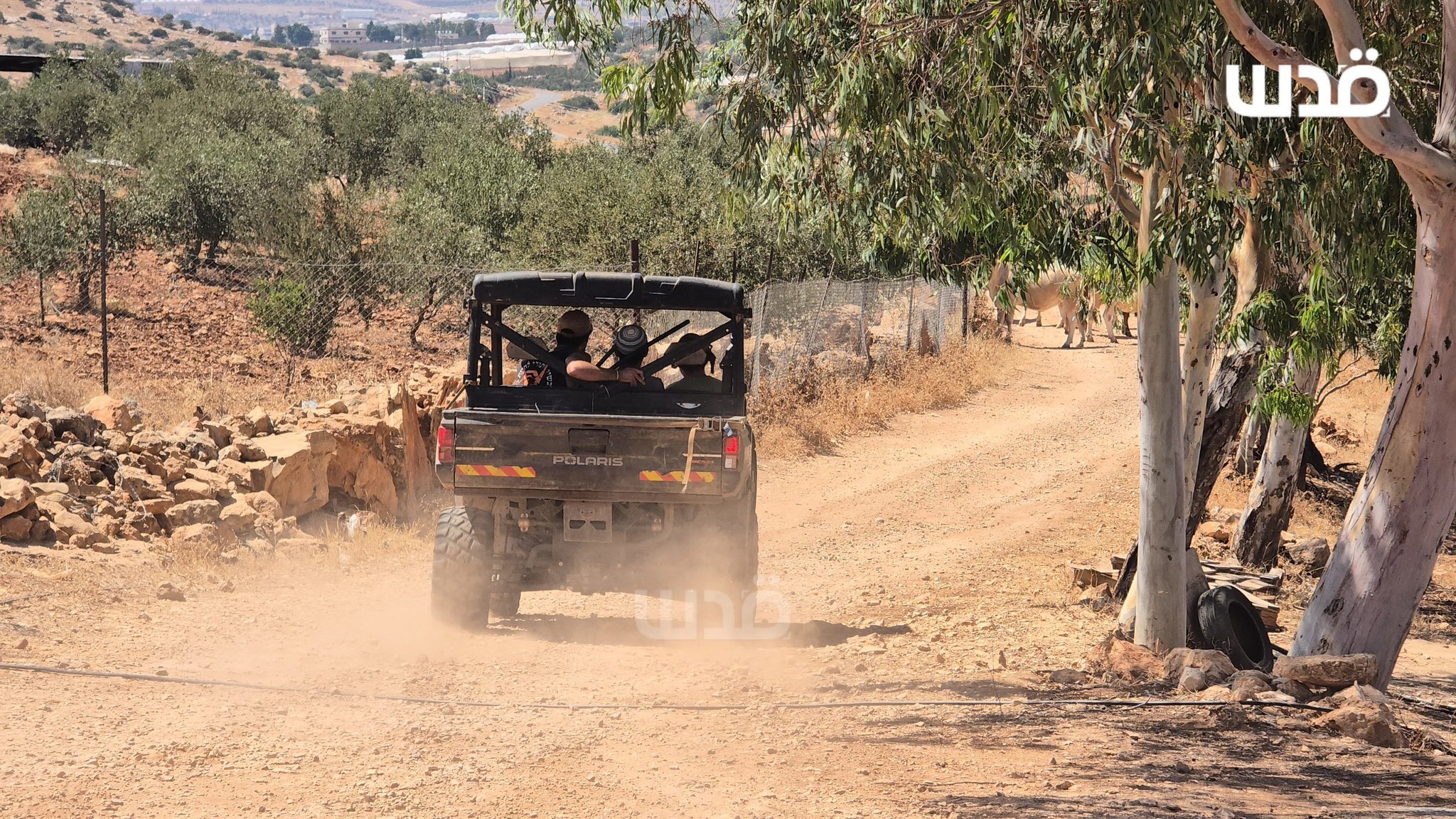
Ethnic cleansing of Khirbet Yerza
West Bank, Tubas, Khirbet Yerza
The situation in Khirbet Yerza (or Khirbet Yarza) is highly critical. It is one of the most stark examples of rural displacement happening in the northern Jordan Valley and Tubas Governorate.
Khirbet Yerza was historically a small, tight-knit herding and farming community of about 14 families (~100 people) who had lived on the land for generations, relying entirely on livestock and crop cultivation. Following years of worsening pressure, the community fled the village entirely. Evacuations peaked when residents were given just a three-day ultimatum amid intensive attacks, forcing them to uproot their families, tents, and livestock to seek refuge closer to the city of Tubas.
Over the years, a combination of escalating settler violence, military orders, and targeted economic pressure has effectively devastated the community's way of life. Due to intense, escalating violence from armed settlers—including the burning of pastures, physical assaults, and livestock theft—combined with systemic military demolition orders and "firing zone" restrictions, the resident families were recently forced to completely abandon the village in January 2026 and flee toward Tubas, leaving them displaced and economically devastated.
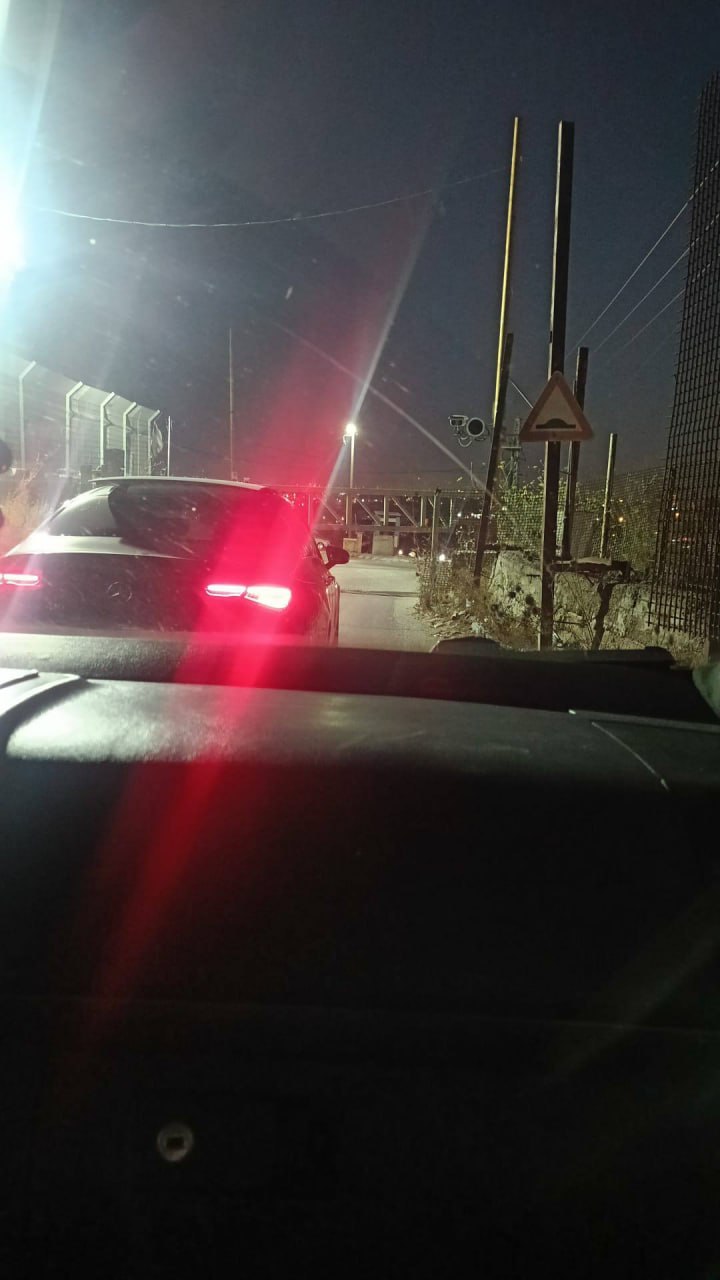
Recurring settler attacks on Atara
West Bank, Ramallah, Atara
Atara (عطارة) is a Palestinian town north of Ramallah, in the central West Bank. Resident faces mainly issues linked to movement control, land restrictions, and proximity to Israeli settlements.
The Atara military checkpoint, a permanent Israeli military checkpoint was established at the southern entrance of Atara after the Second Intifada (around 2000). It controls the main access between northern Ramallah-area villages and Ramallah city, making it a strategic point for movement through the central West Bank. Closures or intensified checks have repeatedly disrupted Palestinian movement, causing delays for workers, students, patients, and commercial traffic.
Parts of Atara’s land have been affected by Israeli Ateret settlement expansion (established in 1981.). The construction of bypass roads serving Israeli settlements also affected surrounding Palestinian land and created additional restrictions through security zones along roads. Ateret is located on a hilltop near Atara, creating a situation where the Palestinian village is surrounded by settlement-related infrastructure and security arrangements.
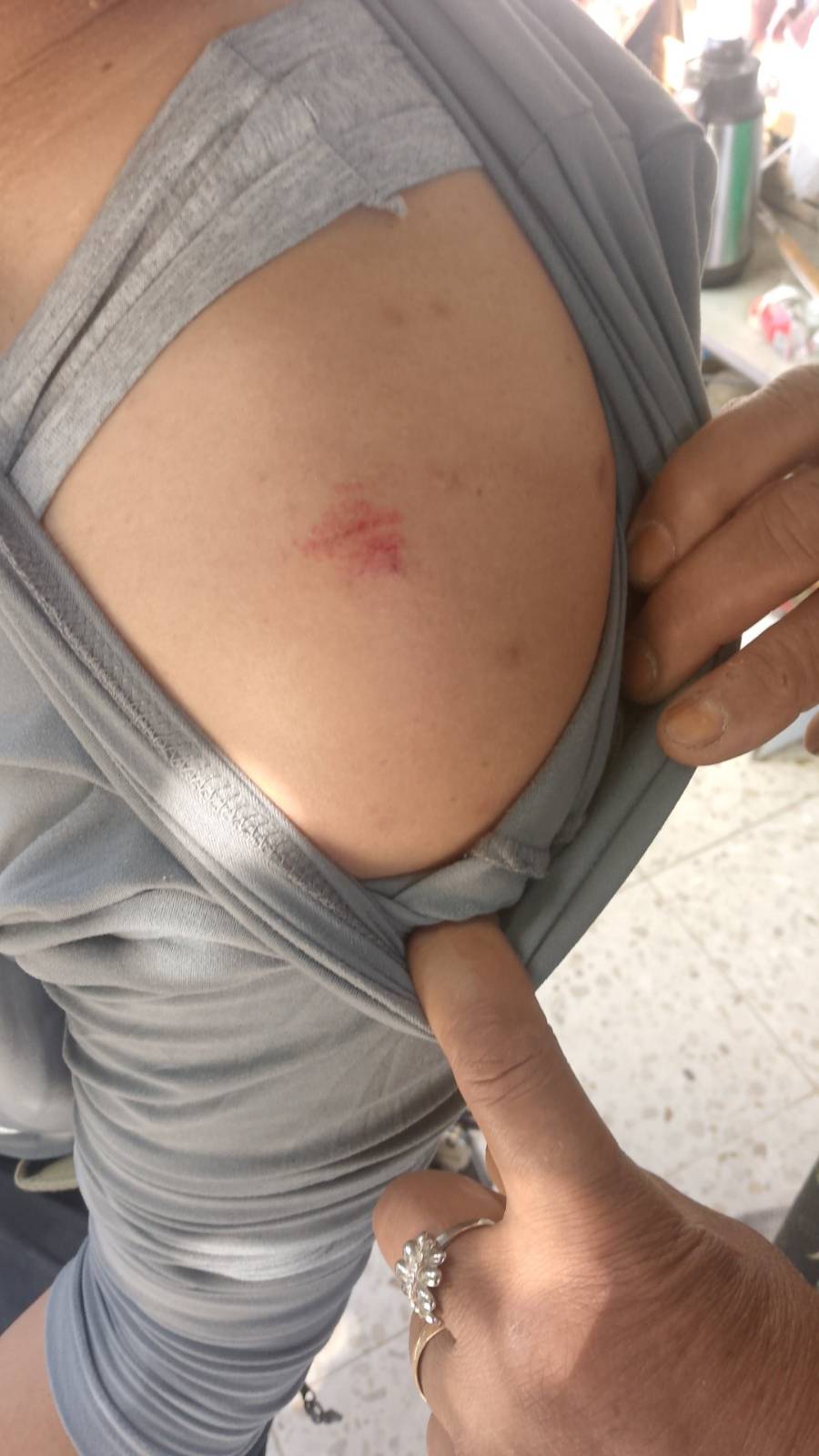
Settler attacks on Khalet al-Hummus
West Bank, Masafer Yatta, Al-Khalil/Hebron, Khallet al-Hummus
At least 2 martyred
Khallet al-Hummus (خلة الحُمّص), south of Yatta in Masafer Yatta, is targeted by by settlers from the Susya settlement/outpost network.
The water issue is particularly important. By late July 2026, reports documented settlers taking control of four wells and redirecting water toward a newly established outpost.
There appears to be a geographical link between the attacks and the Susya settler network: the Land Research Center specifically reported a cattle outpost at archaeological Khirbet Susya approximately 1 km from the Ubaid family's land, while the July/August attacks are repeatedly attributed to settlers from Susya.
Two of the proeminent settlers in the outpost established around March 2026, are Tov Luski and Nachman Goldring.
## **Khallet al-Hummus — settler-attack chronology**
**21 October 2025**: Settlers attacked land belonging to the Ubaid family: cattle were released onto the fields, hundreds of trees were cut/damaged, irrigation networks and agricultural structures were damaged, and a water well under construction was filled in. The Land Research Center noted a cattle outpost at Khirbet Susya, about 1 km east of the family's land.
**26 November 2025**: Settlers from Susya attacked residents of Khallet al-Hummus with sticks, clubs and fists. Four people were injured, including a 61-year-old woman and an 11-year-old child. Settlers also released cattle and sheep in the area, frightening residents and preventing them from leaving their homes.
**1 December 2025**: A second major attack on the Ubaid al-Masri family's agricultural land: settlers destroyed/removed hundreds of trees, cut fences, damaged agricultural rooms and a toilet, and damaged irrigation infrastructure. The documented losses included roughly 500 grapevines and 350 olive trees.
**11 March 2026**: Settlers from Susya entered Ashraf Nassar's home, smashed surveillance cameras and fruit trees, and stole solar-powered floodlights.
**24 June 2026**: Armed settlers attacked residents in Khallet al-Hummus and Wadi al-Rakhim. Four Palestinians were injured: two from beatings and two from pepper spray. Dozens of trees were also destroyed and an agricultural road was blocked.
**3 July 2026**: Settlers released livestock onto Palestinian land belonging to Aziz Ad'ais, damaged the surrounding fence and trees, damaged water tanks and destroyed grape trellises. A separate report the same day records settlers releasing livestock and taking control of Palestinians' water wells.
**4 July 2026**: Settlers, reportedly under army protection, attacked the Ubaid al-Masri family. Two Palestinians suffered bruising and pepper-gas inhalation; Israeli forces arrested Samir Ubaid, one of those injured, as well as foreign solidarity activists.
**15 July 2026***: Settlers entered Khallet al-Hummus and stole the solar panels supplying Ashraf Nassar's home with electricity.
**19 July 2026**: Settlers released a herd of cattle onto land planted with fruit trees belonging to Samir Ubaid.
**21 July 2026**: Settlers seized a Palestinian water well and pumped its water toward a newly established settler outpost.
**22 July 2026**: Settlers stole a horse belonging to Zaid Muhammad Mahmoud Rashid and detained Mahmoud al-Masri.
**23 July 2026**: Settlers seized two additional rainwater-collection wells, bringing the reported number of wells taken in the preceding days to four, with the water being diverted toward a newly established outpost on Palestinian land.
**31 July 2026**: Settlers entered Khallet al-Hummus, damaged the door of Ashraf Nassar's home and part of its walls, and attempted to enter the house.
**15 Augustus 2026:*** Settlers released livestock around Palestinian homes in Khallet al-Hummus and prevented residents from leaving their houses.
**29 Augustus 2026**: Major new attack: armed settlers from Susya attacked Palestinians in Khallet al-Hummus, beating residents and injuring several people. A foreign activist was pepper-sprayed, suffering breathing difficulties. Property was damaged; settlers also reportedly entered Palestinian water wells and bathed there. The attack was reported as occurring under the protection of Israeli forces.
**Masafering (kivsa shchora) testimony on July 26, 2026:**
What really happened in Khallet al-Hummus?
A settler trespassed to agricultural land with his flock and attacked a Palestinian resident. Many settlers and soldiers joined, and in coordination with the authorities and the media, presented the whole story in a distorted way. Large military forces raided the area and caused significant damage: they smashed car windows, punctured tires, broke down house doors, and confiscated numerous security cameras - likely ones that had documented the sequence of events during the attack. Contrary to the false claims that the incident took place “near Lusky’s farm,” it actually occurred about two kilometers away, near Palestinian homes on the outskirts of the town of Yatta, in an area where an outpost has been established in recent months with the involvement of members of the Lusky family.
Within Israel’s system of apartheid and repression, lies are an integral part of reality, and the truth is something that can be reshaped to serve a purpose.
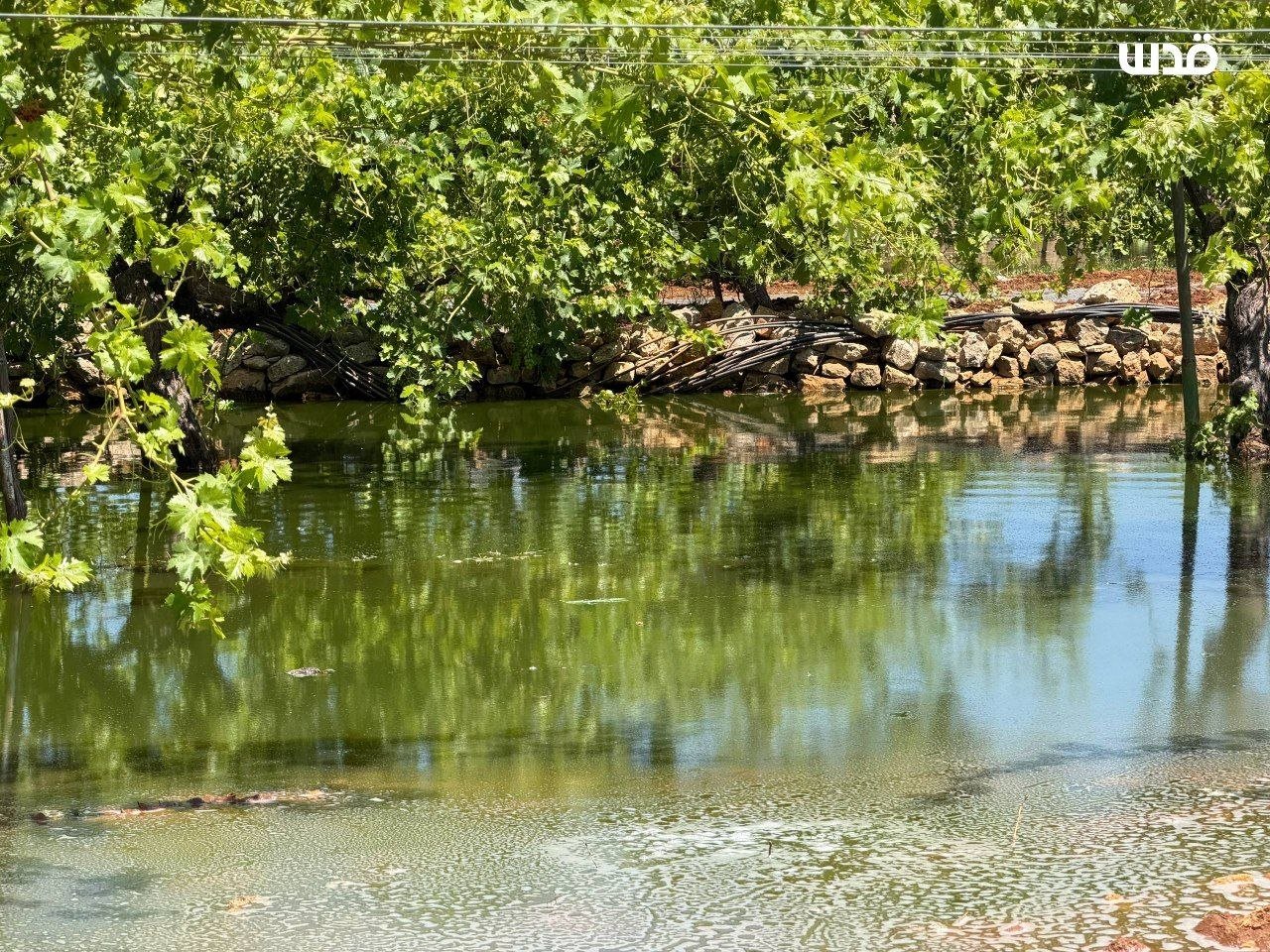
Beit Ummar under settler attacks and land theft
West Bank, Al-Khalil/Hebron, Beit Ummar
Beit Ummar is a Palestinian town located about 10 km north of Hebron in the southern West Bank. Its strategic location, near Israeli settlements and along Route 60—the main north–south highway connecting Israeli settlements and Palestinian areas—has made it a focal point of land disputes, military control, and repeated tensions.
Following the 1995 Oslo II Accord, Beit Ummar’s lands were divided into Area B (Palestinian civil control with Israeli security control) and Area C (full Israeli administrative and security control). The town has faced extensive land restrictions due to its proximity to the settlement of **Karmei Tzur** and Route 60.
Settler-related incidents reported by human rights organizations include property damage, attacks on homes and vehicles, and agricultural harm. Beit Ummar’s economy relies heavily on agriculture, especially grape vineyards and olive groves, but farmers have reported tree uprooting, restricted access to farmland, and intimidation that affects their livelihoods.
The town has also been affected by environmental damage linked to wastewater and sewage runoff from nearby settlement of Kfar Etzion. Reports by organizations such as the Norwegian Refugee Council have documented pollution in areas including Wadi Shakhit, where contaminated water has damaged agricultural land, harmed olive trees, and reduced farmers’ income.
The Israeli military maintains a strong presence around Beit Ummar, including checkpoints, watchtowers, and road restrictions aimed at securing Route 60 and nearby settlements. The town’s approximately 17,000 residents experience frequent raids, arrests, and clashes during protests or military operations. Over the years, several residents, including minors, have been killed during confrontations with Israeli forces.
**Timeline of the events:** *(Ongoing)*
**On June 26, 2026**, around 23:00, a group of settlers from the Etzion colony pumped wastewater (sewage) from inside the colony to citizens’ agricultural lands in the town of Beit Ummar;
**On November 23, 2025,** Israeli forces bulldozed Palestinian land near Beit Ummar to expand Karmi Tzur settlement.