
Genocide .live

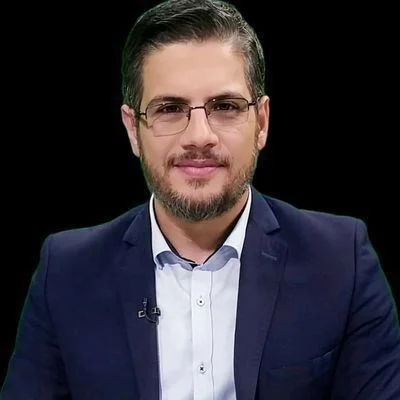
Assassination of the journalist Sheikh Ali Noureddine
South Lebanon, Tyr, Sour
26 January, 2026
At least 1 martyred
On January 26, 2026, in the afternoon, an Israeli military drone targeted a vehicle on the road linking Hosh to Sour in southern Lebanon. The driver, Sheikh Ali Noureddine, was critically injured and later succumbed to his wounds near the Hosh mosque.
Lebanon Foreign Minister Joe Rajji sent a letter to the U.N. Security Council and its secretary-general, lodging a complaint over Israel’s ongoing violations of Lebanese sovereignty in recent months, according to the state-run National News Agency (NNA)
The Hezbollah's media relations condemned "the treacherous assassination committed by the Israeli enemy against the journalist and imam of the town of Al-Housh in the city of Tyre, Sheikh Nour al-Din, in an attack that amounts to a war crime, and is added to the enemy’s record of brutal crimes against media professionals, civilians, and humanity as a whole". She pointed out that "targeting the martyr journalist warns of the danger of the enemy continuing its attacks to affect the media body in all its forms and names, in continuation of the policy of systematic assassinations and attempts to silence the word of truth and the free voice".
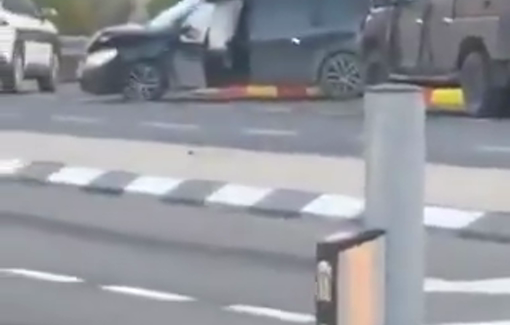
Attempted summary execution of Ammar Majed Hassan Hijazi
West Bank, Ramallah
25 January, 2026
On January 25, Israeli police shot and seriously injured a Palestinian man from Nablus early Sunday near the Oyun al‑Haramiya area north of Ramallah in the central occupied West Bank, before seizing him.
The incident occurred along Route 60, a corridor that has seen a sharp escalation in shootings, military operations, and settlers attacks amid intensifying violence across the West Bank.
Initially, the Palestinian General Authority for Civil Affairs informed the Ministry of Health that the victim, identified as Ammar Majed Hassan Hijazi, 34, from Nablus in the northern West Bank, was fatally shot after Israeli police opened fire on his vehicle.
Palestinian sources reported that Hijazi was driving through the area when police fired directly at him, causing his car to crash into a concrete barrier. The Israeli army and police isolated the entire area and moved him to Shaare Zedek Medical Center in Jerusalem in an extremely serious condition.
Later on, Israeli sources, including The Times Of Israel, reported that the Palestinian driver was not killed but critically injured, and added that the police said he reportedly sped at officers before they shot him.
In its report, The Times Of Israel said Police stated that officers at the scene instructed the driver to halt, and added that as one officer moved toward the vehicle, the driver allegedly accelerated in his direction, leading the officer to open fire. The police alleged that the driver then tried to escape but slammed into a concrete barrier moments later.
Hijazi was unarmed, and no weapons were found in the vehicle. Witnesses said they heard multiple bursts of gunfire and saw Israeli police sealing off the area immediately afterward.
Israeli police claimed the driver was speeding, ignored orders to stop, and “breached a military roadblock” near what Israeli outlets refer to as the “British Police Junction” on Route 60. According to their statement, an officer approached the vehicle, after which the driver allegedly accelerated toward him, prompting the officer to fire. Police added that the driver then attempted to flee by reversing at high speed before crashing.
However, an eyewitness cited by Al‑Jazeera Arabic contradicted key elements of the Israeli narrative. The witness said the car had been speeding earlier, but emphasized that the fatal shots were fired after the vehicle had already stopped and reversed abruptly. The account suggests the officer was not in immediate danger at the moment of the shooting and mirrors several recent cases in which Palestinians were killed at close range during traffic stops or after minor collisions.
Additional Palestinian outlets, including Arab48 and Ma’an News, reported that Israeli forces prevented Palestinian ambulances from approaching the scene and maintained a full closure of the junction for an extended period.
**Name of the victim:**
Ammar Majed Hassan Hijazi, 34
Settler attack on a schoolbus in Ein al-Duyuk
West Bank, Jordan, Ein al-Duyuk
25 January, 2026
On January 25, a group of illegal Israeli settlers attacked a Palestinian school bus near Ein Al-Duyuk, northwest of Jericho in the occupied West Bank, leaving children terrified and crying.
Footage shows the bus being chased and pelted with rocks while the driver was hospitalised.
Palestinians in the area have been forced to call on solidarity activists to escort school buses after repeated attacks, as police ignore and settlers face no accountability.
The incident represents only a fraction of the state-backed violence Israeli settlers continue to unleash on Palestinian civilians on a daily basis.
Day 842 in Gaza (Ceasefire violations)
Gaza
25 January, 2026
At least 2 martyred
**In the Northern Gaza:**
In an Israeli strike, a pregnant mother was wounded at the UNRWA clinic in Jabalia Camp.
**In Central Gaza:**
A fisherman was injured and a fishing boat was damaged after an Israeli strike at sea off Nuseirat, Ma’an News reports. The Gaza Fishermen’s Committee said Israeli naval boats opened machine-gun fire and launched rockets toward fishing skiffs west of Wadi Gaza (central area just south of Gaza City), damaging the boat belonging to Youssef Ahmad Salah and wounding fisherman Salah with shrapnel after a shell exploded near the boat.
In addition, Israeli tanks opened heavy fire southeast of Deir al-Balah in central Gaza
**In Gaza City:**
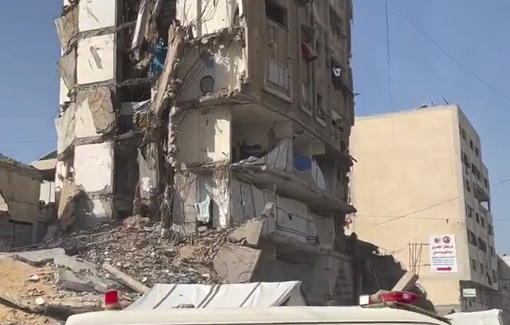
After brief celebrations over launching Gaza’s first radio station since the genocide (On January 6), Israeli quadcopter drones blew up the transmission tower atop Shawwa Tower on Al-Wahda Street in Gaza City (which already sustained considerable damage during the war.). Four citizens suffered injuries. Local sources said that several displaced families live in the ruins of the Shawa Hadari building.
A civilian identified as Mahmoud Qasem, was killed and others were injured after Israeli forces opened fire towards Gaza City’s al-Tuffah neighborhood.
The young man, Atta Ghabayen, was martyred after the occupation forces targeted residents on Al-Hajar Street in the neighborhood Apples Eats of Gaza City.
A number of civilians also sustained injuries after an Israeli warplane bombed a building in Gaza City’s al-Rimal neighborhood.
**Southern Gaza:**
Manar Saeed Al-Madhoun (41 years old), was killed after being shot by the occupation forces in the Al-Iqlimi area, south of Mawasi Khan Younis,
Meanwhile, the Israeli army carried out a large demolition operation southeast of Khan Yunis in southern Gaza, while Israeli artillery also shelled the same area.
**Death toll:**
Medical sources reported on Monday that three Palestinians were killed in the past 24 hours, including one whose body was recovered, and 20 others were wounded by Israeli fire and shelling.
A number of victims remain trapped under rubble and in the streets, as rescue and ambulance crews have been unable to reach them.
**Names fo the martyrs:**
1. Mahmoud Qasem – killed by Israeli forces in Gaza City’s al-Tuffah neighborhood, Gaza City.
2. Ata Ghabayin – East of Gaza city
3. Manar Saeed Al‑Madhoun (41) – killed by Israeli gunfire in the Al-Iqlimi area, south of Mawasi near Khan Younis.
Settler attack on a Christian family in Birzeit
West Bank, Birzeit
24 Jan, 2026 - 25 Jan, 2026
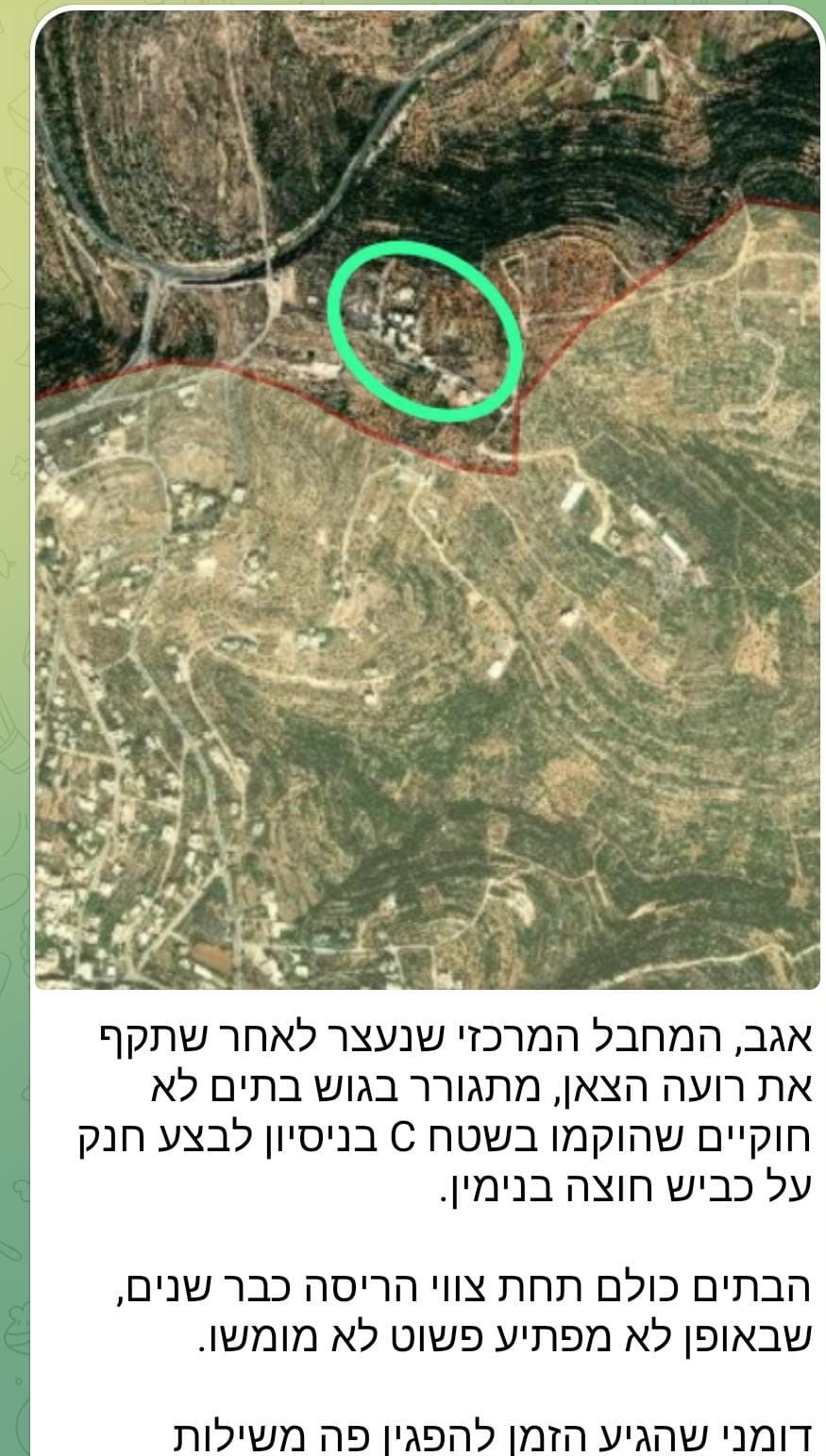
On January 24, 2025, Israeli settler terrorists attacked the home of a Palestinian Christian family in Birzeit, near Ramallah, brutally assaulting an elderly Christian woman and three other family members. The woman was struck in the head with a stone, leaving her in critical condition, and was later taken for emergency surgery. Her son and two other residents were also injured and hospitalized.
Witnesses and reports say settlers stormed the family’s house near the Atara checkpoint, stoned its occupants, and assaulted the woman inside her own home. Settlers also reportedly brought sheep into the family’s yard, vandalized property, and attacked Palestinian land in the area.
Instead of arresting the settlers, Israeli forces arrived after the attack, fired tear gas to disperse locals who intervened, sealed off the area, and arrested three of the woman’s sons. One family member was reportedly tied up and detained, while Israeli soldiers allowed the settlers to leave. According to Israeli army statements cited by The Times of Israel, forces claimed they were responding to reports of Palestinians throwing stones, said one settler was lightly injured, and stated that one Palestinian suspect was detained.
Later the same day, settlers returned to Birzeit, set two cars on fire, and sprayed hateful graffiti in the area. Following the attack, settler groups publicly called for the demolition of the family’s home, escalating the incitement against the victims.
Wadie Abunassar, Coordinator of the Holy Land Christians Forum, condemned the assault, warning of the growing pattern of Israeli settler terrorism against Christian Palestinians, following the violent attack that left a Christian mother and her children injured.
Settler-linked websites later published a video showing a Birzeit resident defending his home, throwing a stone at a settler as settlers attacked his house and beat his mother inside.
According to Ramy Abdu, the settlers acted under the protection of the Israeli army, assaulted a 60-year-old woman and a child, vandalized property, and fired live ammunition and tear gas at anyone approaching the area. One son was injured and hospitalized, while another was arrested. According to Times of Israel: "One of the Israelis was lightly hurt and taken to a hospital, the army says, adding that it also detained one suspect and handed him over to the police for further questioning."
The incident reflects a broader pattern of settler violence in the West Bank, in which Palestinian victims are arrested following attacks, while Israeli perpetrators face little to no accountability.
The victim, 62-year-old Najat Emil Jadallah is in critical condition, suffering from a skull fracture and fractures in her legs.
**According to Ramy Abdu**, the settlers, under Israeli army protection, attacked Palestinian land and homes in Birzeit, north of Ramallah near the Atara checkpoint. Settlers brought their sheep into a family’s yard, assaulted a 60-year-old woman and a child, and vandalized property. Israeli forces arrested one family member, detained another after tying him up, sealed off the area, and fired tear gas and live ammunition at anyone who approached. The woman was taken to surgery after being struck on the head with a metal pipe, while her son was injured and hospitalized as another son was arrested.
[Source](https://x.com/RamAbdu/status/2015142371869257788?s=20)
**Reaction of Mariam Barghouti @MariamBarghouti:**
Israeli soldiers are acting like bandits across the West Bank— looting homes and carrying out armed theft. Just moments ago Israeli army detained two men near Atara checkpoint just outside Ramallah and stole 500$ from one and 700$ from the other. Meanwhile Israeli settlers are calling on chatgroups to burn the entire town of Atara to the ground as they expand their outposts in the area. Israelis are a mafia who are armed to the teeth with a kaleidoscope of weapons, it’s not just the army— and in that reality Palestinians are being brutally expelled and robbed of their homes and belongings. Its a series of state sponsored highway robberies. source:
**Statement of Munther Isaak MuntherIsaac:**
*Yesterday, Zionist settler thugs attacked the village of Birzeit, near Ramallah. They uprooted trees and deliberately let their flocks loose on Palestinian families’ lands—lands that are not only a source of livelihood, but a source of dignity and rootedness.
When one woman from the village dared to shout at them and confront them, the settlers attacked her. She was attcked and had to be hospitalized and was placed in intensive care. Thank God, today her condition is stable.
When her son and other relatives saw what was happening, they did what any human being would do: they rushed to defend her and pushed the attackers away.
Now here is the real question: What did the Israeli army do? They did not arrest the settlers.
They did not protect the family. They did not stop the attack. Instead, they beat the Palestinians and arrested the son who defended his mother. As of now, we have no news about him.
Let us call this what it is: Zionist terrorism.
The problem is not only the settlers. The problem is the system that empowers them.
The problem is the immunity they enjoy. The problem is the protection they receive from the army. The problem is the ideology that sees Palestinians as disposable, as obstacles, as people without rights.
This is not an isolated incident. This is happening everywhere in the West Bank. Day after day. Village after village. Family after family. Farmers, shepherds, children, elderly people—all are victims of this organized lawlessness.
The family I mentioned happens to be Christian. But let no one think this is about Christians or Muslims. This is about Palestinians. All of us. We are all now exposed. All unprotected. All living under a system where the attacker is shielded and the victim is punished.
This is injustice in its naked, brutal form. A system that protects violent settlers and arrests a son for defending his mother is not a system of law. It is a system of oppression and apartheid.
Lord, have mercy.*
[source](https://x.com/MuntherIsaac/status/2015479237008933155?s=20)
**Munther Isaac @MuntherIsaac statement on January 26:**
I just returned from visiting the Im’eid family in the hospital and praying with them. The son is still under arrest. The family is deeply traumatized. They told us their story, and many painful details will stay with me. But one moment in particular has not left my mind. When the soldiers came to the house to arrest members of the family, one of the women, in an act of courage and defiance, refused to open the door. The soldiers broke the window, pointed a gun at her, and in that moment of fear she made the sign of the cross. One of the settlers who had come with the soldiers saw that she is a Christian and said to her: “Why are you here? Go to France.”
This makes me furious. It fills me with rage. Coming from people who, in most cases, came from Europe, who are the very colonizers of this land, and who now dare to tell us that we are the ones who belong in Europe—the level of arrogance and historical distortion is simply outrageous. We are the people of this land. We did not come from somewhere else. We did not arrive yesterday. We are rooted here.
And then comes the familiar line:
“This land is ours, as written in the Torah.”
This is Zionism. They uproot trees. They terrorize families. They assault women. They arrest sons. And they do it in the name of God.
Really?
Thank God, not all Jews agree. (Sadly, many Western Christians do—e.g., Huckabee.)
I told the family how proud I am of them for defending their land and their dignity. These are their trees. These are their fields. These are their lives. They are rooted here, just as deeply as the olive trees they try to uproot.
Please hold them in your prayers. We call for the immediate release of Eid.
Lord, have mercy.
Day 841 in Gaza (Ceasefire violations)
Gaza
24 January, 2026
At least 4 martyred
## In northern Gaza:
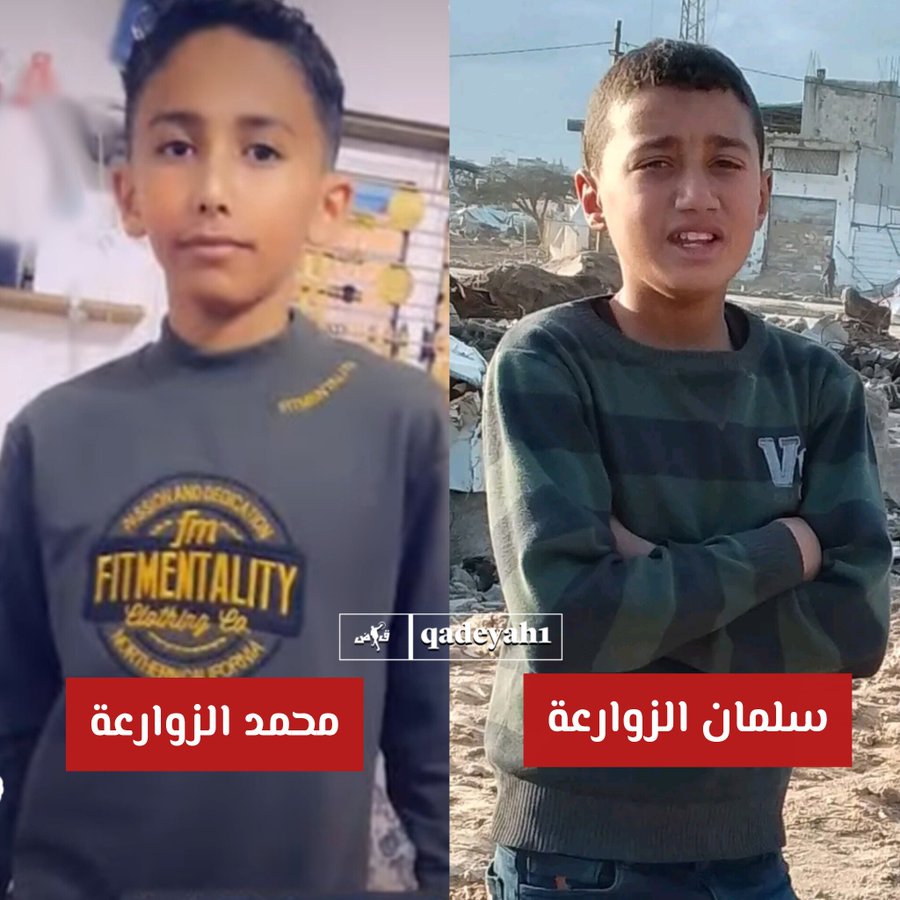
At around 13:15 on Saturday, 24 January 2026, an Israeli drone dropped a bomb on two children who were collecting firewood near Kamal ‘Odwan Hospital in the Beit Lahia Housing Project, northern Gaza Strip. As a result, the two children identified as Salman Zakariah Mohammed al-Zawar‘ah (14) and Mohammed Yousif Mohammed al-Zawar‘ah (15) were killed after sustaining shrapnel wounds to their bodies. They were cusins.
The targeted area lies outside the so-called “yellow zone,” approximately 300 meters south of the area where the IOF were stationed near al-Barawi petrol station on Beit Lahia Main Street. The area is entirely civilian in nature, underscoring that the attack was carried out in the absence of any imminent threat or military necessity.
The father was filmed begging for his child to wake up, to come home with him, to have the lunch his mother prepared.
Names of the martyrs:
1. Mohammad Yousef al-Zawar’a, 15
2. Salman Zakarya al-Zawar’a, 14
**Southern Gaza:**
A young man wad killed by Israeli fire east of Khan Younis.
3. Nour Farid Suleiman Abu Sitta
In its daily report, the health ministry said that hospitals received four civilian bodies, and 12 wounded people over the past 48 hours.
Incitement campaign against activist Andrey X
West Bank, Israel
23 January, 2026
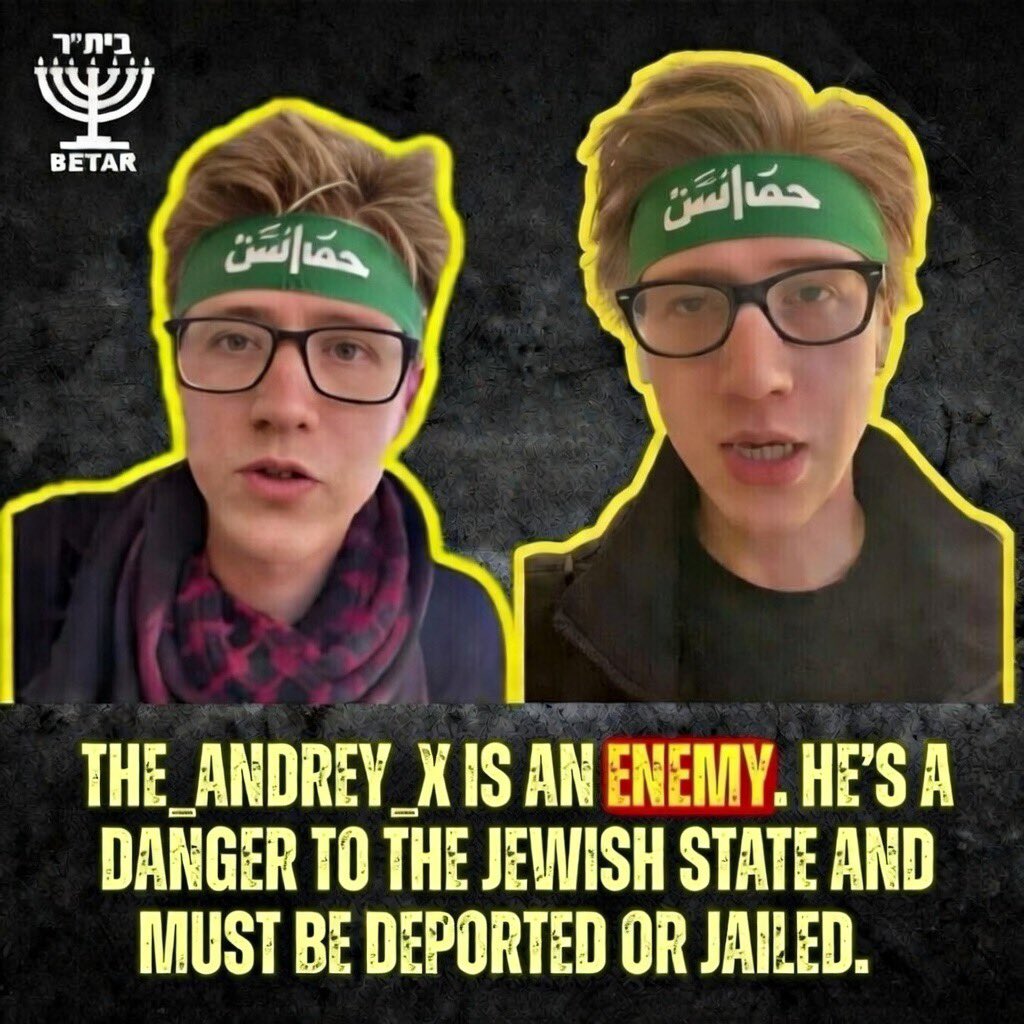
Andrey X, (Andrey Khrzhanovskiy), is a Russian-Israeli journalist and human rights activist known for documenting Israeli settler violence in the West Bank. He is originally from Saint Petersburg, Russia, but was in Israel when Russia invaded Ukraine on February 24, 2022. Because he wrote critically about Russia in the past, he easily sought and obtained Israeli citizenship for the sole reason that he is Jewish. His activism against ethnic cleansing and ongoing genocide has led to multiple arrests and legal cases, and he has been publicly criticized by Israeli officials. Andrey X is an activist and journalist with a large social-media following who documents events in Israel and Palestine.
**Timeline of the incidents:**
**On November 30, 2024,** he posted a video showing himself placing a “Free Palestine” sticker on a wooden beam at a lookout point in Sderot, a site where Israeli visitors or zionist tourists observe the bombardment of Gaza. The area, which later became politically sensitive, was not clearly marked as part of a military memorial.
So, **On December 12, 2024**, nearly two weeks later, plainclothes police arrested Andrey in Tel Aviv, forcing him into an unmarked vehicle. He reports being threatened, beaten, strip-searched multiple times, and denied food and water while detained overnight at a police station in Sderot. He was initially charged with vandalism and disturbing public order, with police claiming the sticker defaced a memorial. Although a judge first ordered his release, police appealed, and Andrey was held three additional days and faced new charges, including assaulting a police officer and “desecrating a memorial,” all of which he denies. He was eventually released on 5,000 shekels bail, banned for 30 days from all Israeli military memorial sites, and remains subject to further questioning. Despite limited Hebrew, no translator was provided during his detention or trial. Authorities openly framed the arrest as political. After the video was posted, Housing Minister Yitzchak Goldknopf publicly called Andrey an “extreme leftist activist” and urged police to stop his activities. Police documents cited both this statement and the pro-Palestinian content of the sticker as justification for the arrest. Andrey’s lawyer, Shahadeh Ibn Beri of the Human Rights Defenders’ Fund, described the case as politically motivated, fueled by incitement and slander from far-right figures and settlers.
**On December 16, 2024**, Andrey published a long tweet about his exprience in jail and the abuses that were committed on him. *“This is crystal clear political persecution,”* Andrey said, adding that jail was devastating not only because of physical abuse, but because of “the sense of your humanity being stripped from you, and the complete loss of agency and autonomy. The Sepcial UN Rapporteur oPt Franceska Albanese commented : *"Yes you are right, what Palestinians endure in Israeli jails is far worse and yet, this does not justify what you are experiencing. Assaulting those who oppose apartheid is apartheid itself, and Israeli policies are becoming more destructive for everyone with every passing day: including its Jewish citizens. Stay strong, you are not alone. Neither you nor the Palestinians. We will bring down apartheid, from both sides, brick by brick."*
**On February 5, 2026,**
Andrey was arrested by Israeli police while covering an anti-Zionist demonstration near the Gaza border. A soldier accused him of assault, suggesting the arrest was politically targeted. He was released after several hours, likely because he holds an Israeli passport. He states later that Palestinian journalists face far harsher treatment, including assassination, detention, and torture, underscoring the dangers of reporting under occupation.
Settler attack on a Palestinien stone quarry
West Bank, Nablus, Urif
21 January, 2026
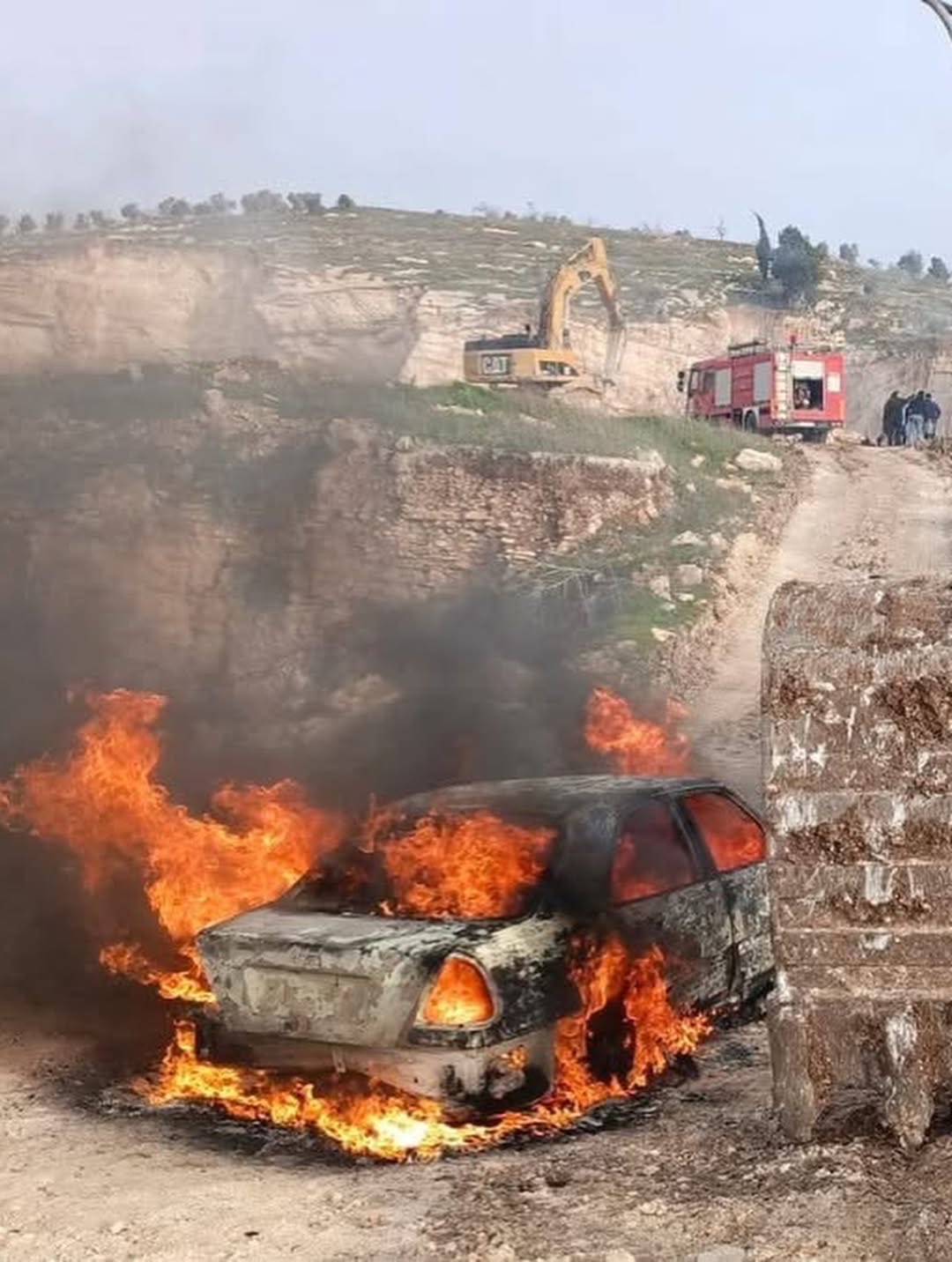
In the early hours of Wednesday, January 21, 2026, Israeli settlers carried out a large-scale arson attack on a stone quarry in the village of Urif, south of Nablus, in the northern occupied West Bank. At first light, dozens of settlers stormed the quarry, setting fire to multiple bulldozers (front-end loaders), cargo trucks, vehicles, and industrial equipment, before physically assaulting two Palestinian workers.
They set fire to 3 bulldozers, 2 trucks, and 5 private vehicles in the northern quarries and crushers owned by the citize,: Issam Al-Safadi
The attack, carried out by illegal paramilitary Israeli settlers, resulted in extensive destruction at the "North Quarries and Crushers" site—one of the village’s main economic lifelines. Heavy machinery, vehicles, and equipment were destroyed in what residents described as one of the most severe assaults on Palestinian economic infrastructure in recent weeks. The quarry, which provides a primary source of income for dozens of families, has been repeatedly targeted over the past year.
According to the Palestinian Civil Defense, fire crews responded to massive blazes that engulfed three bulldozers, two cargo trucks, and five private vehicles belonging to local resident Essam Safadi. Firefighters worked for hours to bring the fires under control while facing ongoing threats from settler groups positioned around the area.
The Palestinian Red Crescent Society (PRCS) confirmed that two workers were injured during the attack, noting that ambulance crews were initially prevented from reaching the site due to the presence of armed settlers.
Residents of Urif said the assault appeared coordinated and organized, fitting a broader pattern of escalating attacks targeting Palestinian industrial zones, agricultural land, and rural communities across the occupied West Bank.
According to B'tselem, dozens of Israeli settlers carrying clubs and flammable materials raided a Palestinian quarry between the villages of ‘Urif and ‘Asirah al-Qibliyah, in Nablus District in the West Bank. They assaulted the workers with stones and clubs and vandalized property. Two workers were badly bruised and taken to hospital. Eleven vehicles were torched, some of them work vehicles and others cars belonging to workers.
Israel is ethnically cleansing the West Bank of Palestinians. Settler militias operating with state backing and military support are part of this policy.
Day 838 in Gaza (Ceasefire violations)
Gaza
21 January, 2026
At least 11 martyred
On January 21, 2026, several Israeli violations of the so-called ceasefire occurred in Palestinian-controlled areas. In the morning, the Israeli army detonated residential buildings east of Beit Lahia in northern Gaza and shelled areas east of Khan Yunis and around al‑Bureij camp. An Israeli helicopter also opened fire at the Deir al‑Balah area in central Gaza, while artillery bombardment struck western Rafah in the south. Israeli artillery also bombed the eastern areas of Jabalia camp in the northern Gaza Strip.
## **Casualties:**
**Central Gaza:**
In a blatant violation of the ceasefire and international law, Israeli aircraft struck a vehicle bearing the emblem of the Egyptian Committee today in Gaza, Central area, in Al-Zaraa, near the Netzarim corrifor, killing journalists Mohammed Qeshta, Abdel Raouf Shaat, and Anas Ghanem instantly. Two other members of the Egyptian Committee crew were also killed in the same strike. At least one body was burned beyond recognition.
A medical source reported that three citizens, including a 10-year-old child and his father, were killed by Israeli gunfire and shelling east of Deir al‑Balah, and taken to Al-Aqsa Martyrs Hospital.
Other sources publishes that a 13-year-old, his father and a 22-year-old man were hit by Israeli drones on the eastern side of the central Bureij refugee camp, according to officials from Al-Aqsa Martyrs Hospital in the central town of Deir al-Balah, which received the bodies.
Israeli artillery shelling near secondary schools northeast of the Bureij refugee camp, which led to the death of three Palestinian, three brothers from Al‑Rjoudi family, according to Al-Aqsa Martyrs Hospital, where the bodies were taken.
**Southern Gaza:**
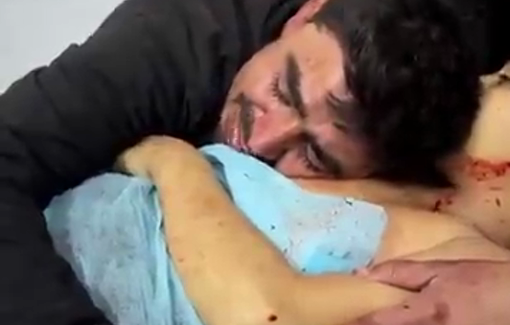
Another 13-year-old, Mutasem Al‑Shrafi, was shot and killed by troops while collecting firewood in the eastern town of Bani Suheila. The Nasser hospital received the body. In footage circulated online, the boy's father is seen weeping over his son's body on a hospital bed.
Nasser Hospital officials also said they received the body of a Palestinian woman shot and killed by Israeli troops in the Muwasi area of the southern city of Khan Younis, which is not controlled by the military.
**Death toll:**
Medical sources in Gaza report that at least 11 Palestinians have been killed by Israeli fire across central and southern Gaza since this morning, Wednesday, January 21, 2026, distributed by 7 martyrs in the center of the Strip and 3 martyrs in its south, in light of the continued raids and artillery shelling. Two citizens were injured by Israeli occupation army bullets, east of the city of Khan Yunis, south of the Gaza Strip, while another citizen was injured by occupation bullets east of the Juhr al-Dik area, northeast of the Bureij refugee camp in the central Strip.
**Names of the martyrs (ongoing):**
1. Mohammed Salah Qashta (journalist)
2. Abdul Raouf Shaat (journalist)
3. Anas Ghneim (journalist)
4. Sarhan Mohammed Sarhan Al‑Rjoudi (civilian, 13)
5. Mohammed Sarhan Suleiman Al‑Rjoudi (civilian, 37)
6. Mousa Mohammed Mousa Al‑Rjoudi (civilian, 22)
7. Mutasem Al‑Shrafi (civilian, 13)
3 Journalists killed in Israeli airstrike on Egyptian Committee vehicle
Gaza, Central Gaza, al-Zahraa
21 January, 2026
At least 3 martyred
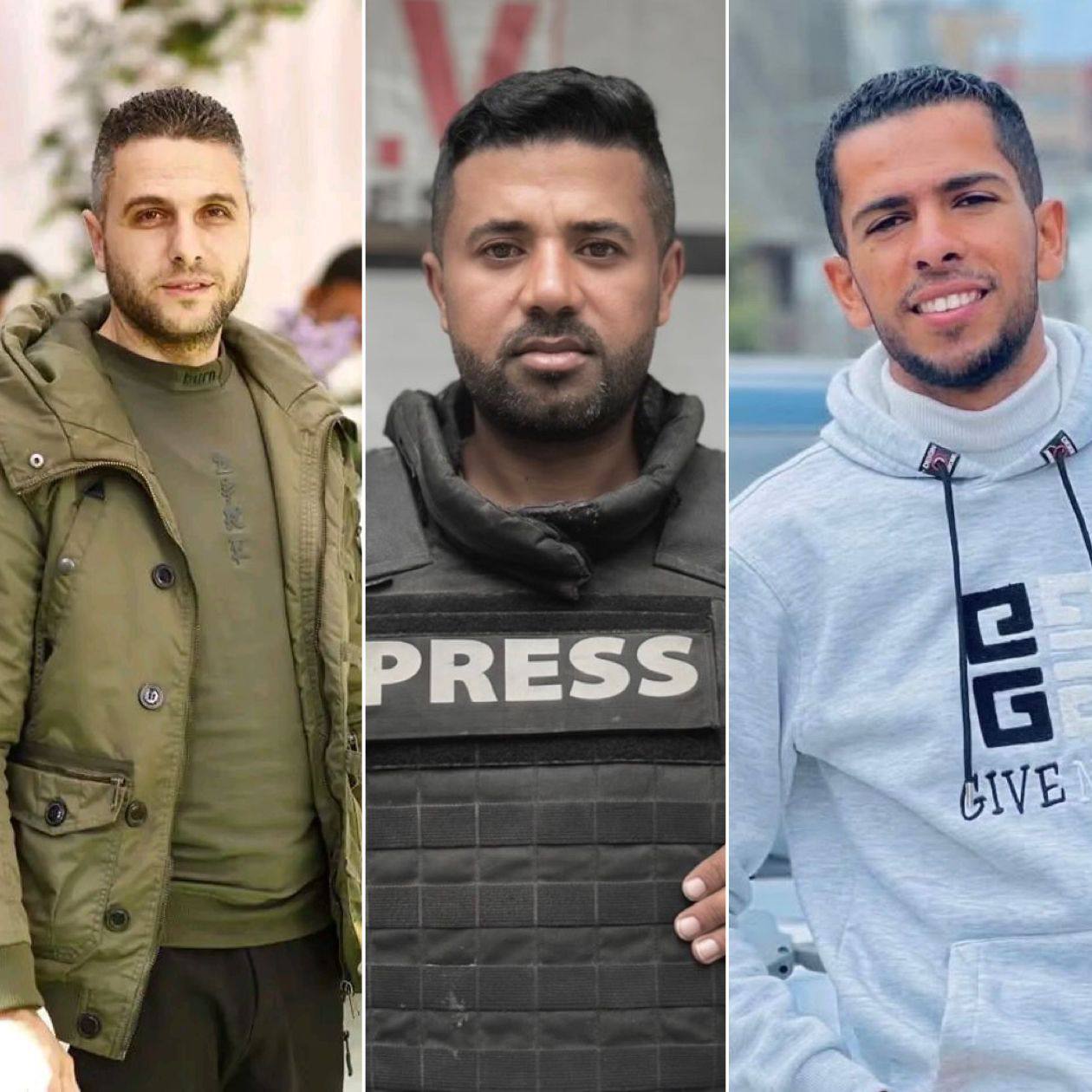
On January 21, an Israeli aircraft struck a jeep displaying the emblem of the Egyptian Committee in the Al-Zahraa area of central Gaza, near Turkish-Palestinian Friendship Hospital at the road between Gaza and Al Moghraqa. Onboard were journalists Mohammed Qishta, Abdel Raouf Shaat, and Anas Ghanim, who were killed instantly. The Egyptian Committee, which operates directly under the Egyptian government, coordinates humanitarian aid in Gaza.
In total, five people were killed in the strike. Four of them were employees of the Egyptian Committee who were working in the area to report on a refugee camp in the Netzarim corridor. The three journalists were on an assignment sponsored by the Egyptian Committee, tasked with filming the tent encampments built by Egypt for displaced Palestinians, according to other local journalists who spoke to Reuters.
The aircraft specifically targeted a jeep bearing the Egyptian Committee logo and carrying accredited media professionals, in a zone that includes the largest camps overseen by the committee. They were reportedly covering the final preparations to open a refugees camp established by the Egyptian Relief Committee. The stuck vehicle was distinctly marked with the committee logo. The strike happened 1.8 km west of the Yellow Line, and 780 meters east of the IDP camp built by the Egyptian Relief Committee.
Available data confirmed both the identity of the vehicle and the mission it was carrying out, indicating that the attack was deliberate. Medical sources reported that one of the victims arrived at the hospital unrecognizable due to the intensity of the direct bombing.
According to Mohammed Mansour, the committee's spokesman, the bodies of two journalists were taken to the Shifa hospital in Gaza City, while the third body was taken to Al-Aqsa Martyrs hospital. Mansour said the journalists were documenting the committee's work in the newly established camp in the Netzarim area in central Gaza. He said the strike occurred about 5 kilometres (3 miles) from the Israeli-controlled area, that the vehicle was known to the Israeli military as belonging to the Egyptian committee. Video footage circulating online showed the charred, bombed-out vehicle by the roadside, smoke still rising from the wreckage, with debris scattered about.
**Names of the martyrs:**
1. Mohammed Salah Qashta
2. Abdelrauf Samir Shaat
3. Anas Ghanim
**Journalist Abdelraouf Shaat:**
Just weeks ago, friends were congratulating him on his wedding. He was known for his bravery after risking his life to save colleagues who were targeted by Israeli army shelling at the journalists’ camp near Nasser Medical Complex.
**IDF spin:**
IDF spokesman in first response to the "unusual" incident in the Gaza Strip: "Earlier today, IDF forces identified a number of suspects who operated a drone associated with the terrorist organization Hamas in the center of the Gaza Strip, in an area that threatens the forces". Immediately after the identification and in light of the risk the drone posed, the IDF targetedly attacked the suspects who operated the drone. The attack was carried out in accordance with the required chain of approvals. Details of the event under consideration".
**Statements:**
Palestinian factions, unions, and media bodies strongly condemned the killing of three journalists whose vehicle was targeted by Israeli forces while they were working in a shelter camp in central Gaza. All described the attack as a serious violation of the ceasefire and international law.
**The Palestinian Journalists Syndicate** said the attack reflects a systematic policy to silence Palestinian voices and conceal crimes in Gaza. It classified the strike as both a war crime and a crime against humanity, held Israel fully responsible, and called on the International Criminal Court and UN bodies to take concrete action and ensure international protection for Palestinian journalists.
**Hamas** said the killings constitute a clear war crime and part of a systematic campaign against journalists and humanitarian operations, urging mediators—especially the United States—to intervene immediately and compel Israel to uphold the ceasefire.
**Islamic Jihad** rejected claims of a “field error,” calling the strike a deliberate political message aimed at sabotaging the ceasefire’s second phase, intimidating mediators—particularly Egypt—and imposing Israeli conditions through military escalation. It linked the attack to ongoing violations enabled by international inaction.
**The Democratic Press Gathering** described the killings as part of Israel’s broader war of genocide and an attempt to silence media exposing crimes against civilians. It called the targeting of journalists a war crime and urged international journalists’ unions and human rights organizations to act, provide protection, and pursue accountability in international courts.
**AFP Statement:** Agence France-Presse (AFP) called for a thorough and transparent investigation into the killing of its freelance photojournalist, Abdel Raouf Shaath. In a statement released on Janary 22, the agency said: “A very large number of local journalists have been killed in the Gaza Strip over the past two years, while foreign journalists are still unable to enter the Strip freely.” AFP expressed its deep sorrow at the killing of 34-year-old photojournalist Abdel Raouf Shaath, who had been a regular freelance photographer with AFP for nearly two years and was well-liked by the AFP team covering Gaza.